A volar plate injury occurs when the joint is bent backwards in the wrong direction, leading to the volar plate being partially of fully torn away from the bone. It is a common injury and usually occurs with falls, ball sports and activities of general living. It can be either partially torn, fully torn and in some cases the injury can cause a small fracture of the bone at the base of the joint. The volar plate is also commonly injured with a joint dislocation.
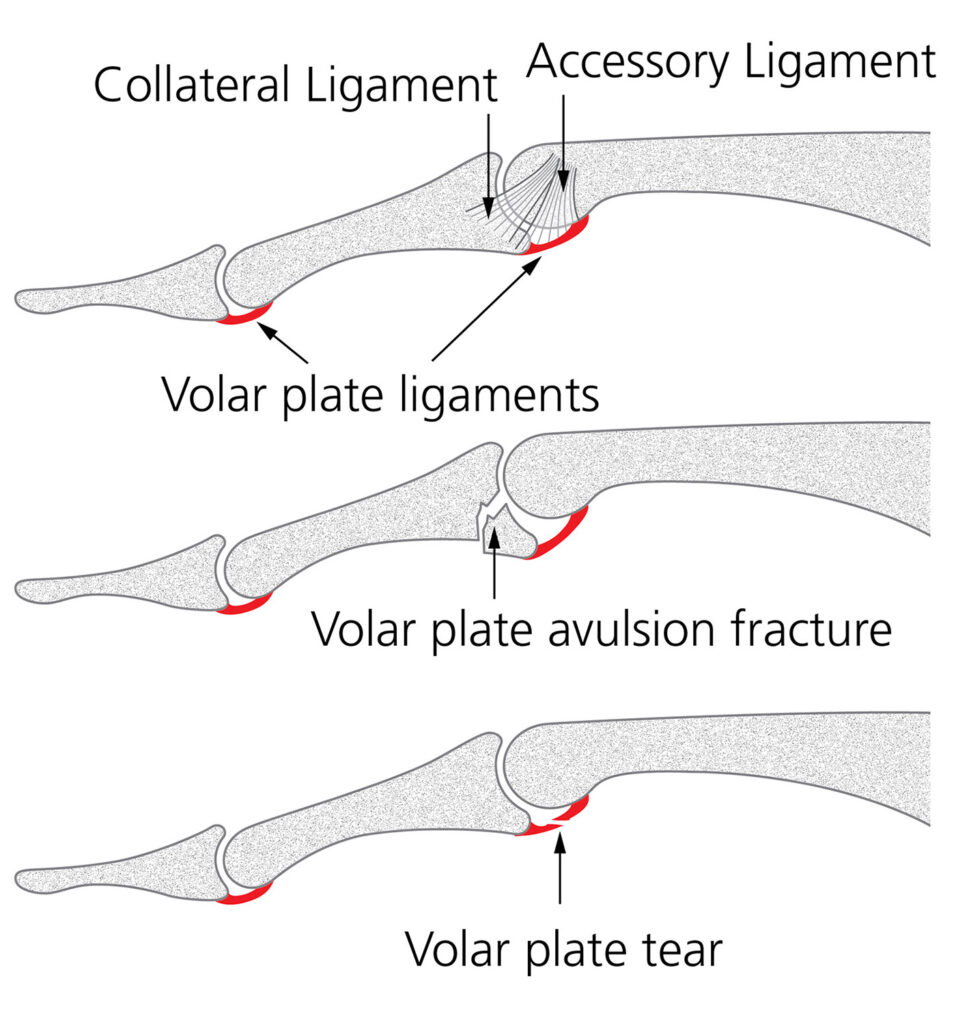
Stiffness and difficulty bending or straightening your finger. In some cases, your finger may look crooked or deformed.
The clinician can normally diagnose this injury by asking about how the finger was injured.
They look at the swelling and tenderness of the joint and will test the stability of the joint.
An x-ray may be done to check if the bone is broken where the volar plate attaches.
The aim of treatment is to get back full and pain free movement of your finger.
These injuries are treated without surgery using exercises and support for your finger by either (strapping or splinting) your finger depending on the type of injury.
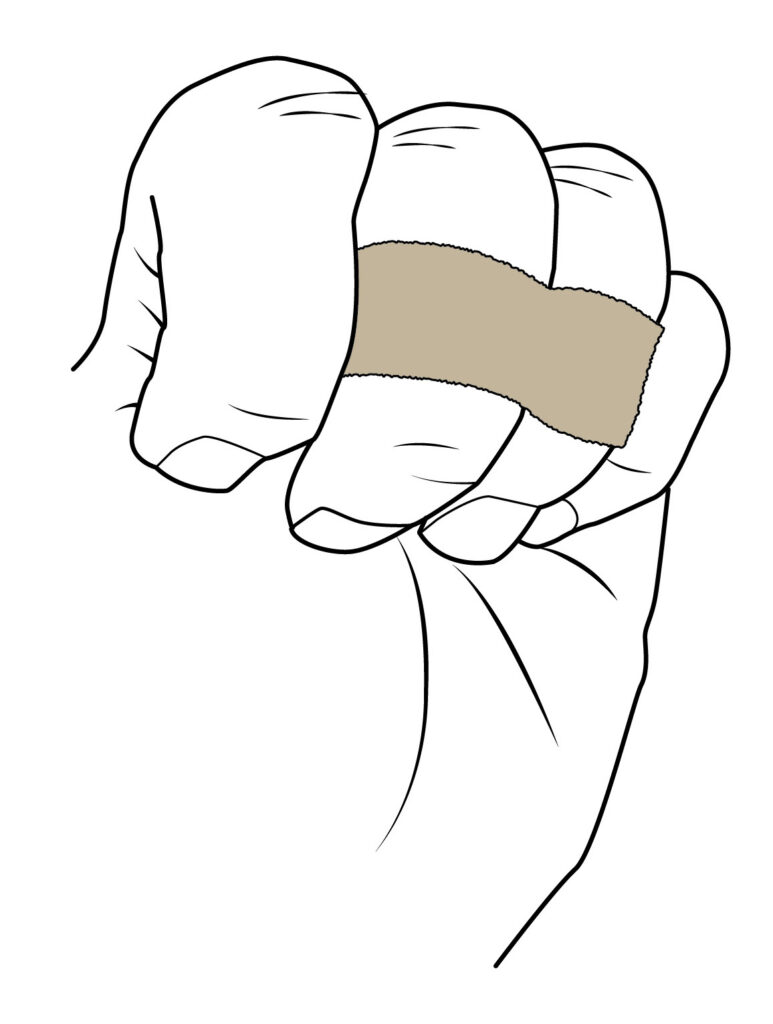
Your finger may be strapped to the finger next to it. Sometimes a splint is fitted to the back of the finger instead of strapping. Both treatments are to protect the injury and prevent further stretching while it heals. These treatments are usually only needed for 3 weeks.
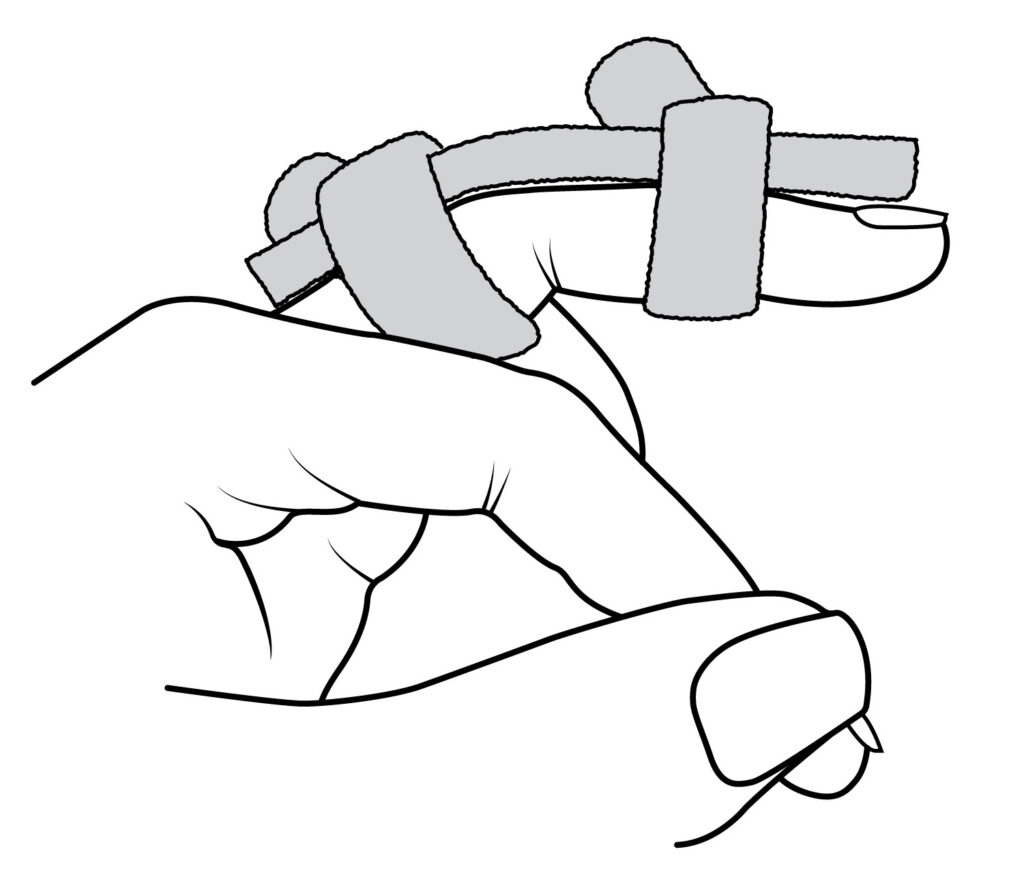
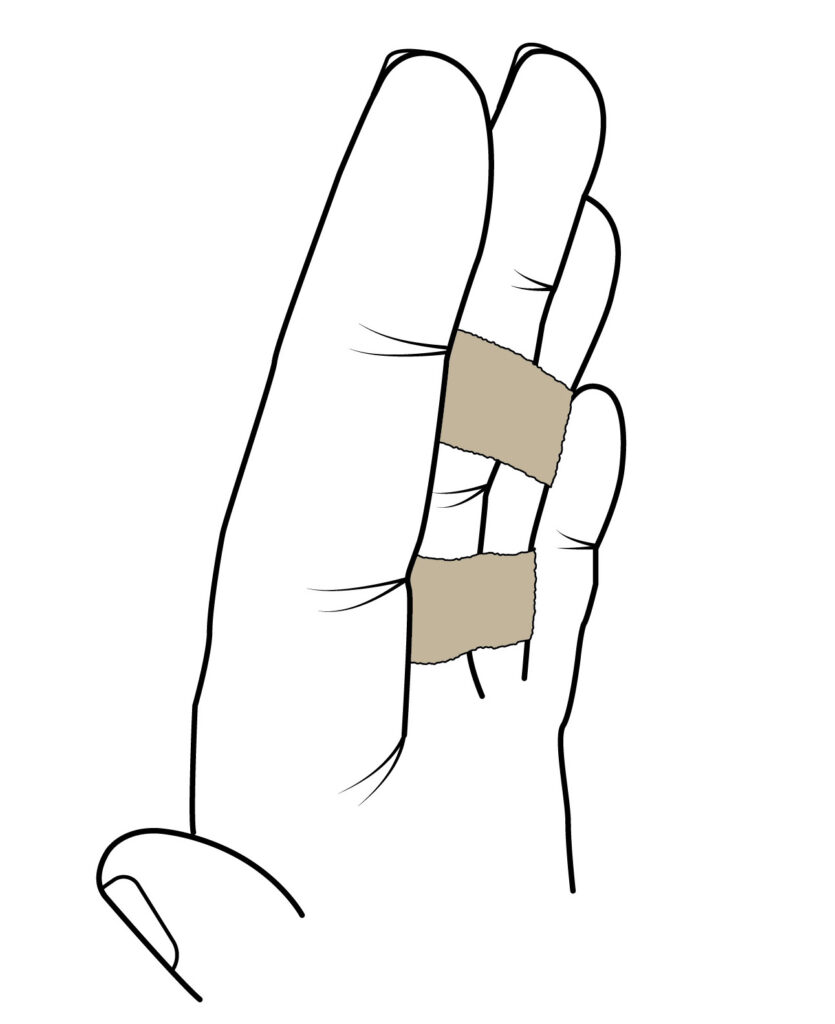
You will be able to remove the strapping or splint to wash your hand but it is important to replace it how it was originally fitted after washing.
It is important to move the finger regularly to reduce the swelling and increase your movement. It is important to carefully follow the exercises given to you, according to the type of injury.
You can use simple pain killers and you can reduce the swelling by raising your hand higher than your heart by either resting on some cushions or the back of a chair, whenever you are resting.
These exercises can be started immediately. They should be started in a comfortable range and will slowly improve.
1. Bend the top 2 knuckles into a hook position with the big knuckle straight. Return your fingers to an open position. Repeat this 10 times every 2 hours through the day.
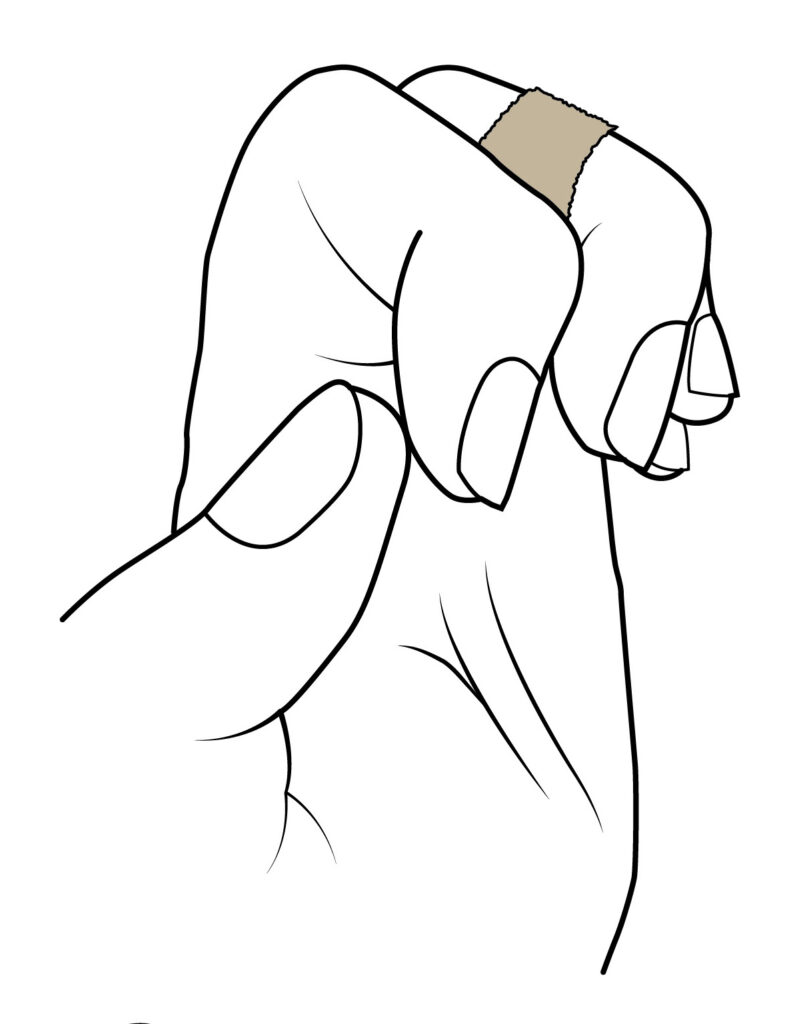
2. Bend your fingers into the palm to make a full fist. Repeat 10 times every 2 hours through the day.
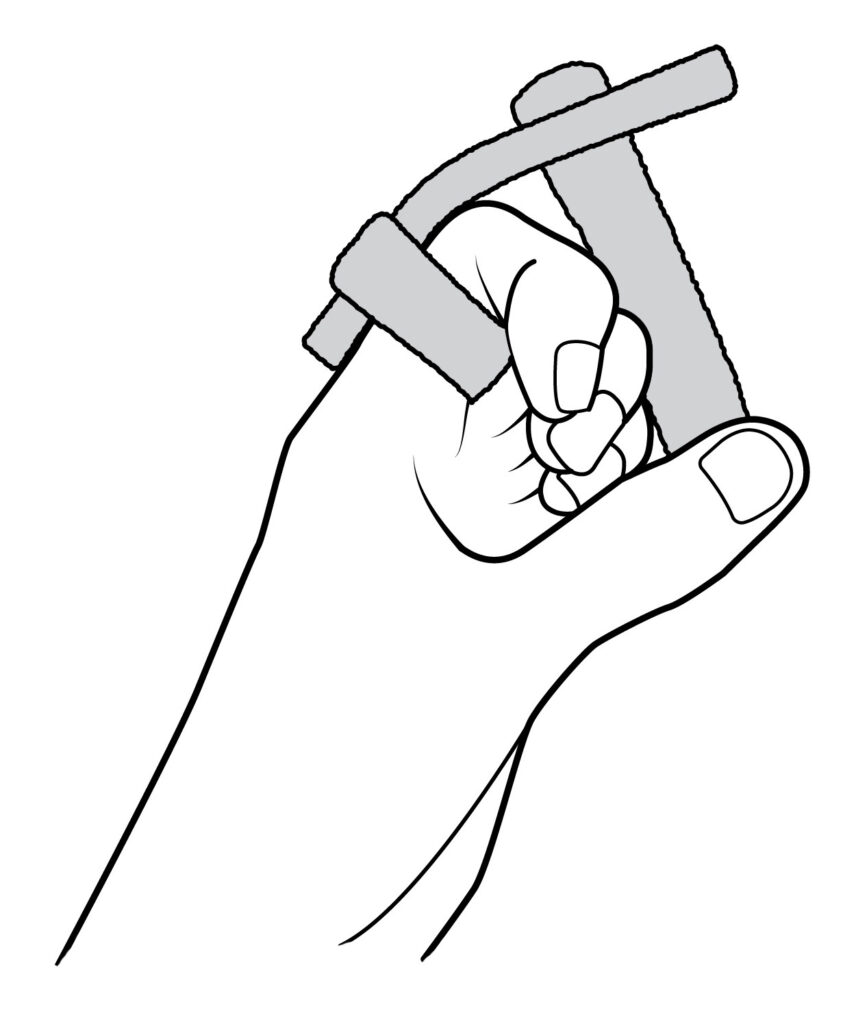
1. Loosen the top Velcro strap but keep the strap around the bottom of the finger. Bend your fingertip of the injured finger, towards the palm to try to make a hook, then straighten the finger back to the splint. Repeat this 10 times every 2 hours.
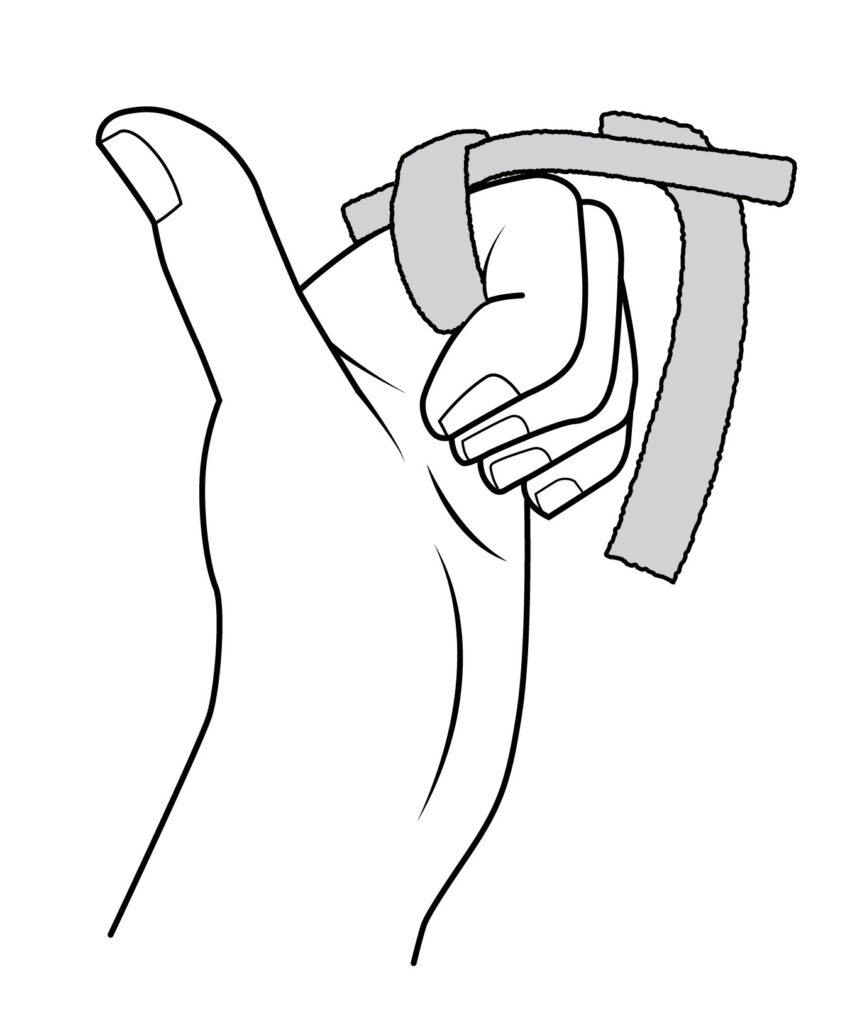
2. Keep the bottom strap around the finger as the exercise above. Bend the fingers into the palm to make a full fist and then straighten them back to the splint. Repeat 10 times every 2 hours.
You can remove the strapping/support or splint to clean and wash your hand. Always make sure that the skin is fully dry before reapplying the support or splint and make sure it is replaced in the same way as it was originally fitted.
These injuries usually heal well, and your finger should return to good use. Your clinician will give you advice on:
Sometimes….
Your injured finger can take longer than expected to fully heal.
You may have swelling and stiffness, after the strapping/support has stopped, that can be a long-term problem. Your therapist will help you with early movement to prevent this.
The Plastics Trauma Clinic can be contacted between 7.30am and 4.00pm, 7 days a week including Bank Holidays. Telephone: 01274 364397
Hand Therapy can be contacted between 8.00am and 6.00pm Monday to Thursday or between 8.00am and 3.30pm on Friday. Telephone: 01274 382874
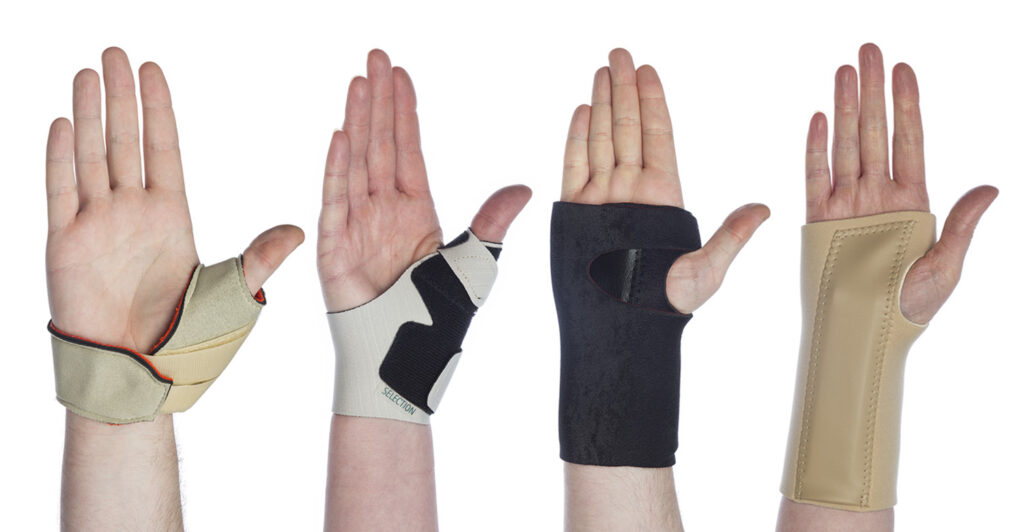
If you have any of the following, during or after you have worn the splint, you must stop wearing the splint immediately:
You must also contact the Hand Therapy Team at the Bradford Royal Infirmary. Telephone 01274 364347, Monday to Friday between 8.00 am and 4.00pm.
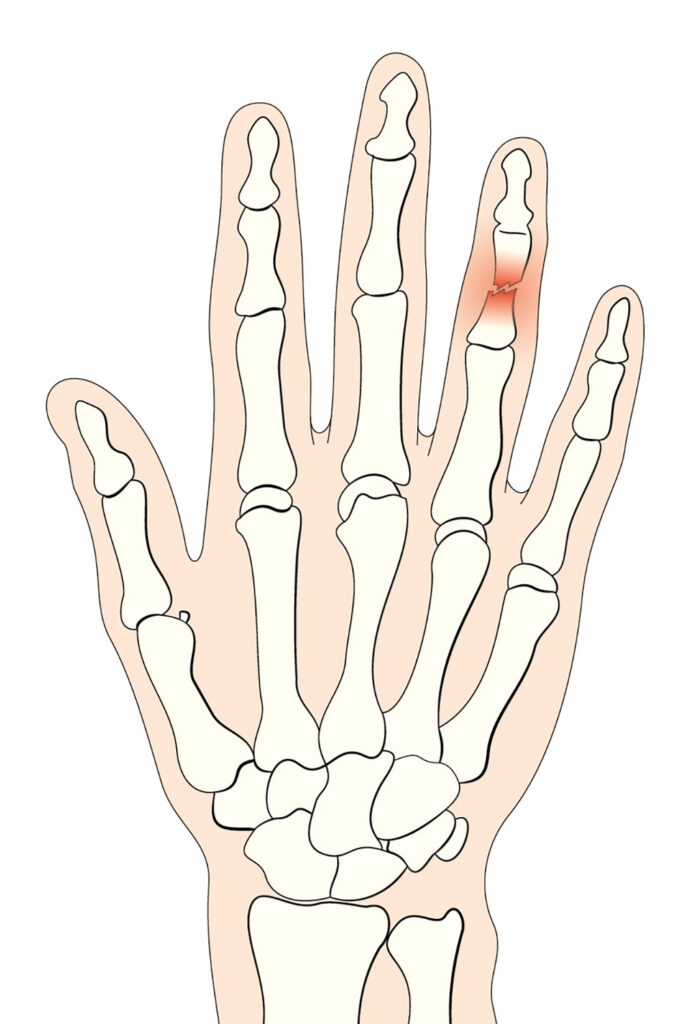
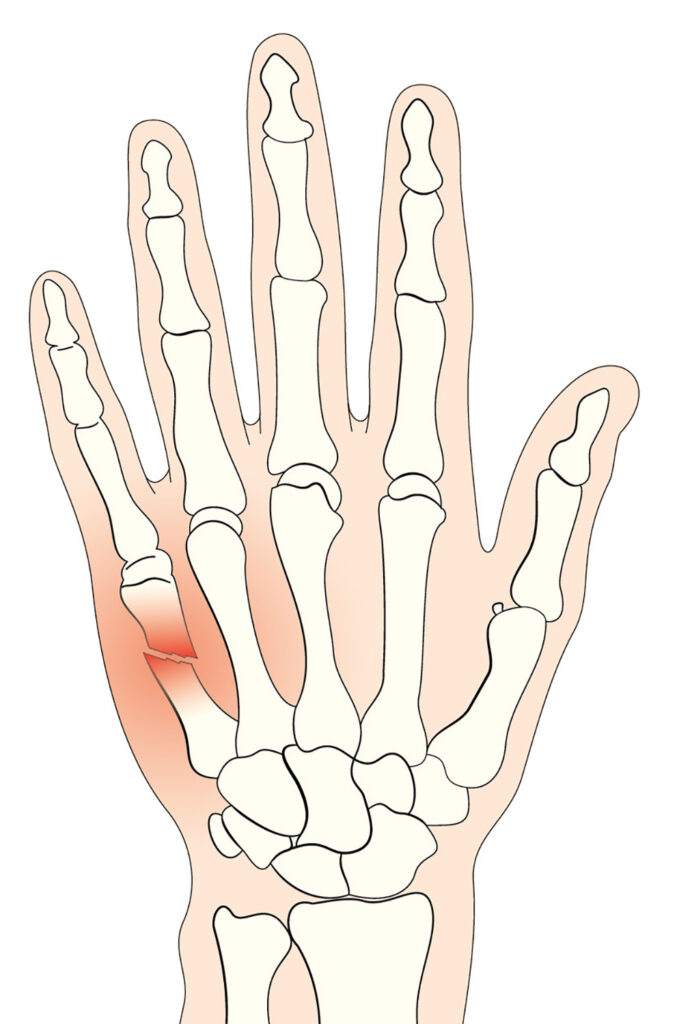
The K wire is inserted into the bone to hold the fracture in a good position while it heals.
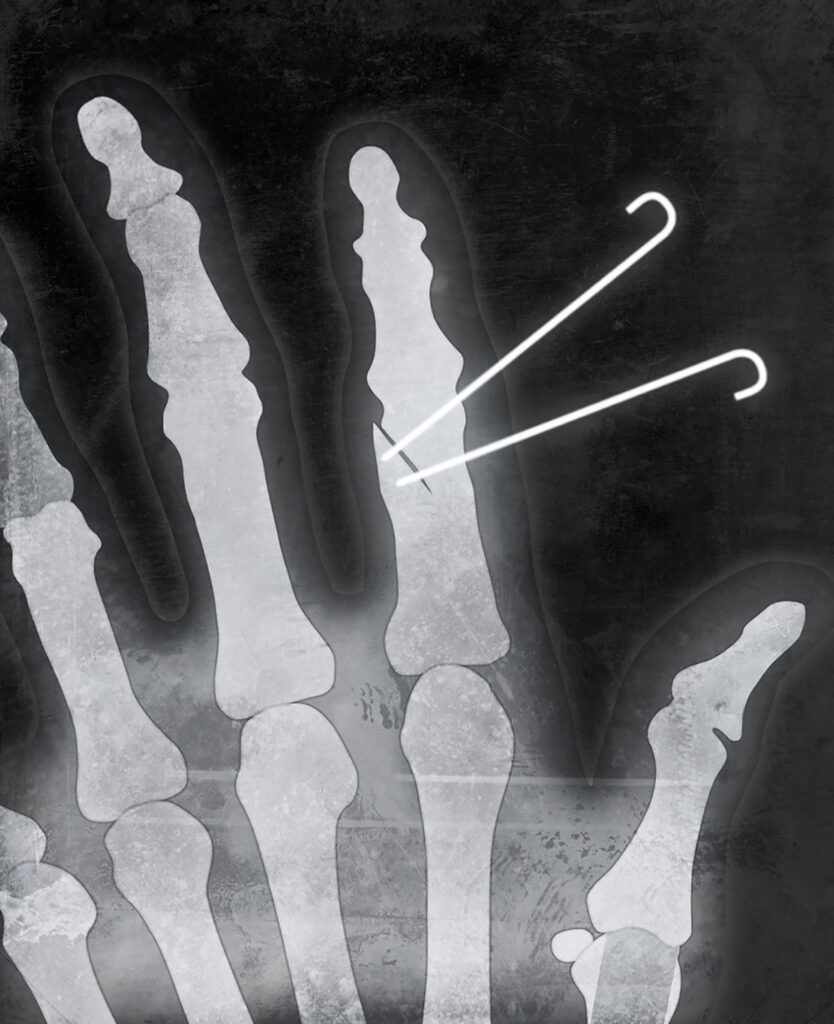
The repairing phase can last up to five weeks, depending on your age, general health and if you smoke.
It is normal to have swelling, bruising and stiffness with a loss of movement of your fingers whilst the fracture is healing. This may make your hand feel achy and stiff.
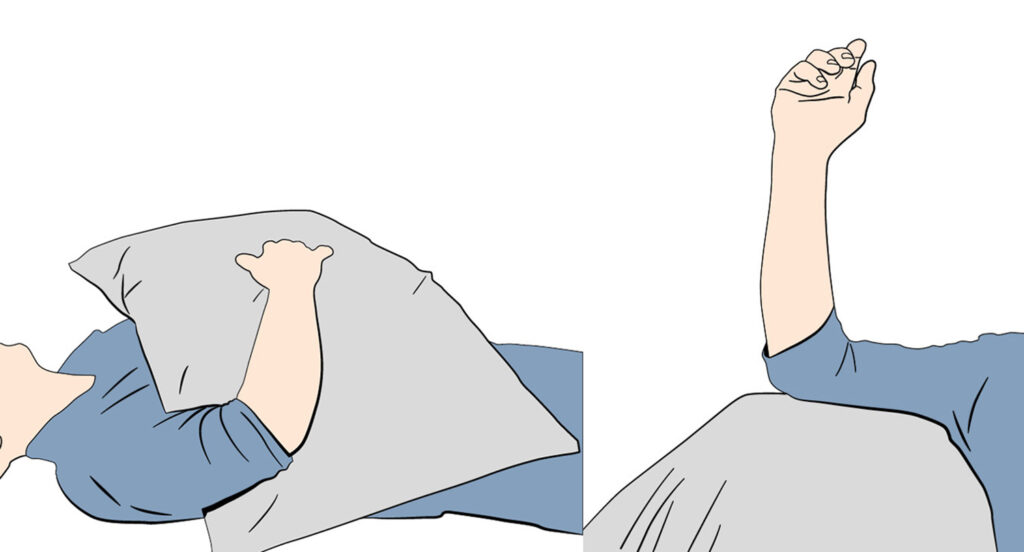
The swelling and stiffness can be improved by making sure that your hand is not held below the level of your heart. When you are resting, put your arm on cushions with the hand above your elbow or on the back of a chair.
Keep moving the unaffected fingers to help reduce any stiffness. Your therapist will advise you about moving the affected finger.
Illustrations from booklet MID 24010417
It is important to keep the K wire site and dressing clean and dry. This will stop the skin around the K wire from breaking down and reduce the risk of infection.
Contact the plastics trauma team if you suspect an infection (increase in pain and swelling with redness, which can track from the hand to the forearm) contact details can be found at the end of the leaflet.
Pain is a normal side effect of breaking a bone and can be helped by simple pain killers. The clinicians will advise you on what to take after your surgery.
The K wire will be removed when the bone has healed sufficiently, around four weeks after being put in place. It may take longer to heal if you are a smoker.
This procedure should not feel too uncomfortable. Any discomfort from the removal of the wire should settle within a few hours. We recommend that you continue with simple pain relief if required.
Do not get the K wire site wet for 48 hours, due to the risk of infection.
The movement and strength of your hand and fingers should improve after the wire has been removed.
You should be able to resume normal function after approximately 12 weeks.
Bone takes about three months to regain enough strength for contact sports.
You may find that the swelling lasts three to four months or more.
You may also find that the injured hand/finger will be more painful during cold weather
For further details and advice please contact the Plastics Trauma Clinic on: 01274 364397 between the hours of 7.30am and 5.00pm (available every day - including bank holidays)
Digital nerves give the feeling to the skin on the side of your fingers and thumb. There are 2 digital nerves in each finger and thumb; the radial digital nerve and the ulnar digital nerve.
Your digital nerve has been repaired to help improve the feeling in your finger or thumb. After surgery it can take several weeks for the nerve to regrow.
It is normal to have swelling in your hand after surgery. To help drain the swelling, whenever possible:
Do rest your hand above the level of your heart. Use a cushion to support your arm if this is comfortable.
Do move your fingers, thumb, wrist, elbow, shoulder and neck regularly to prevent stiffness in these joint.
Do not allow your hand to hang by your side.
Early movement of your fingers and thumb as described in this leaflet will help to manage your swelling and prevent stiffness later.
Continue to protect any numb areas of skin from hot or sharp objects as you might not be able to feel heat or pain in this area for a few weeks.
You can use your hand for light activities once you feel comfortable after your operation for example:
- Doing up buttons and shoelaces
- Dressing yourself with light weight clothes
- Holding a paper.
- Using a mobile phone
After 3 weeks you can start to gradually return to your normal day-to-day activities including sports.
You will not stop your digital nerve healing by moving your fingers and thumb. Bending and straightening your fingers will help regain movement and reduce swelling in your hand and fingers.
You should complete the following exercises:
1. Straighten your fingers but do not push them straight with your other hand.
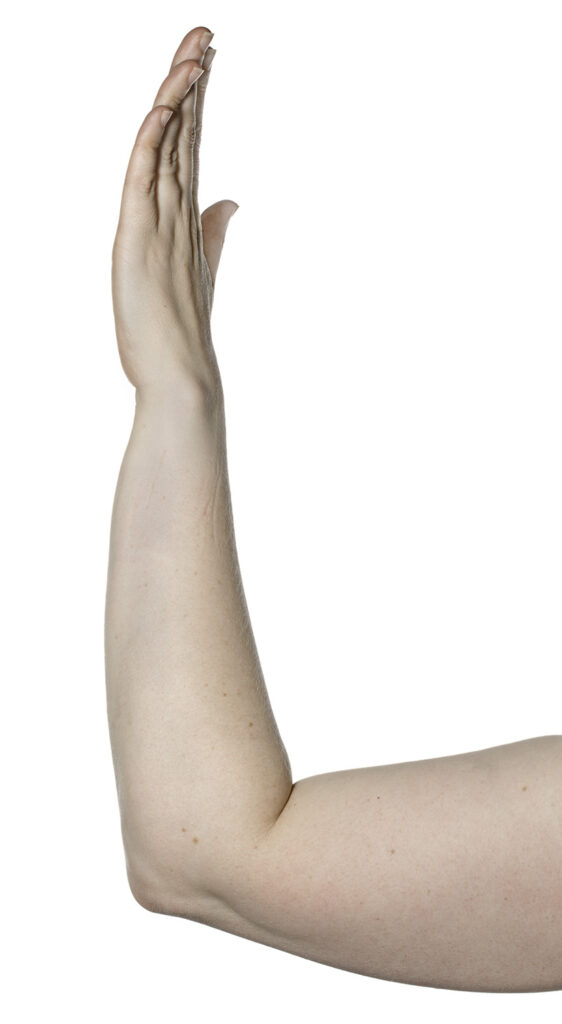
2. Close your had to make a full fist.
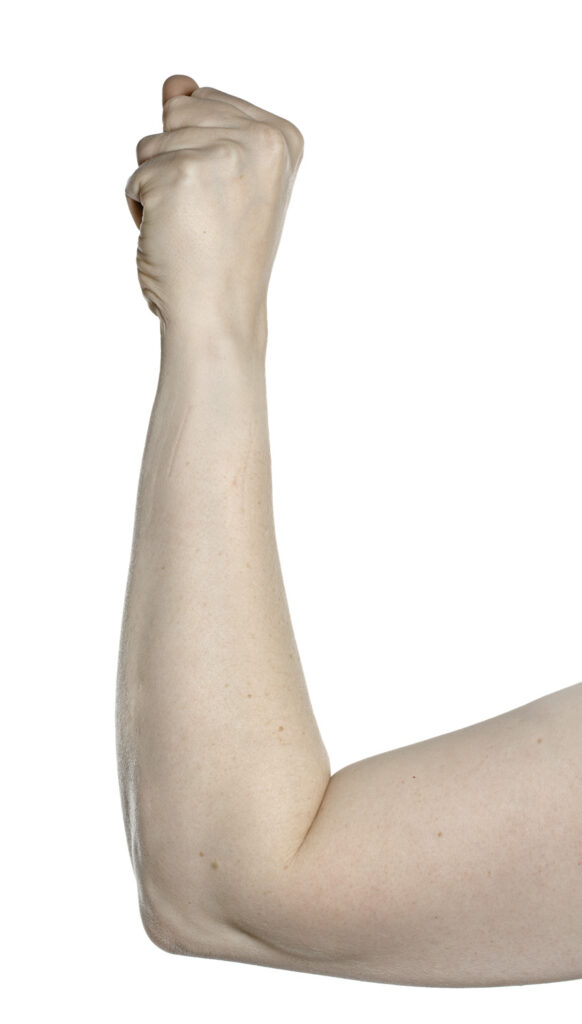
3. Rest your elbow on the table. Touch each fingertip with your thumb.
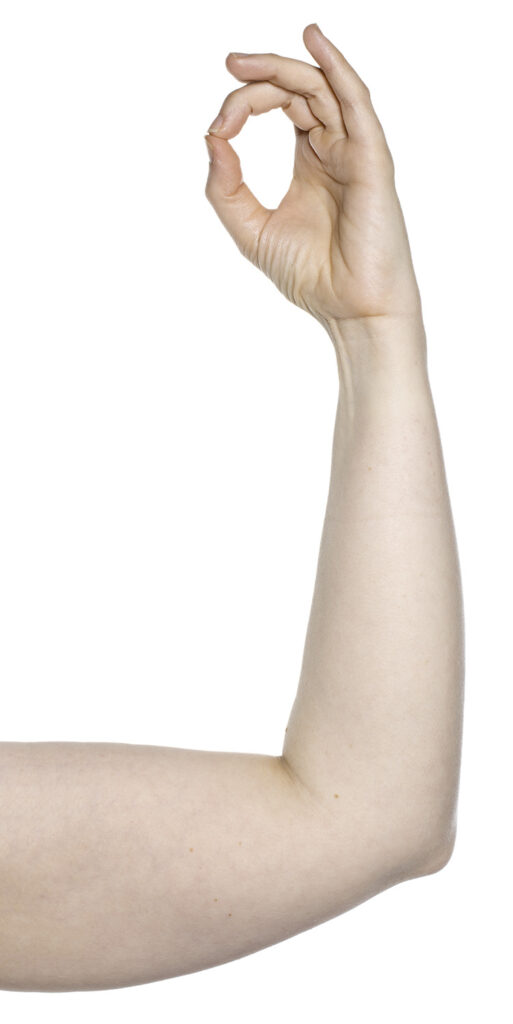
Complete 10 repetitions of each exercise 4 times a day.
Regularly touching the numb area helps to improve nerve recovery in your finger or thumb.
Massage also helps make the scar more mobile so it does not limit movement of the fingers or thumb. Once the stitches are removed and the wound is dry you can start to massage the scar.
Use a simple non-perfumed light moisturiser to massage the scar in circular movements.
Do this at least 4 times a day for 5 minutes.
A review appointment will be made in the hand therapy department for 6 weeks after your operation to check your movement and the recovery of your nerve.
Contact the therapy department admin team:
Contact the plastic surgery department if you still have an open wound and are concerned that you have a wound infection. Signs of infection are:
The Hand Therapy Team
Telephone: 01274 382874
Monday to Thursday 8.00 am – 6.00 pm, Friday 8.00 am – 3.30 pm
The Plastic Surgery Department
Telephone: 01274 364397
Monday to Friday 8.00 am – 5.00 pm