Digital nerves give the feeling to the skin on the side of your fingers and thumb. There are 2 digital nerves in each finger and thumb; the radial digital nerve and the ulnar digital nerve.
Your digital nerve has been repaired to help improve the feeling in your finger or thumb. After surgery it can take several weeks for the nerve to regrow.
It is normal to have swelling in your hand after surgery. To help drain the swelling, whenever possible:
Do rest your hand above the level of your heart. Use a cushion to support your arm if this is comfortable.
Do move your fingers, thumb, wrist, elbow, shoulder and neck regularly to prevent stiffness in these joint.
Do not allow your hand to hang by your side.
Early movement of your fingers and thumb as described in this leaflet will help to manage your swelling and prevent stiffness later.
Continue to protect any numb areas of skin from hot or sharp objects as you might not be able to feel heat or pain in this area for a few weeks.
You can use your hand for light activities once you feel comfortable after your operation for example:
- Doing up buttons and shoelaces
- Dressing yourself with light weight clothes
- Holding a paper.
- Using a mobile phone
After 3 weeks you can start to gradually return to your normal day-to-day activities including sports.
You will not stop your digital nerve healing by moving your fingers and thumb. Bending and straightening your fingers will help regain movement and reduce swelling in your hand and fingers.
You should complete the following exercises:
1. Straighten your fingers but do not push them straight with your other hand.
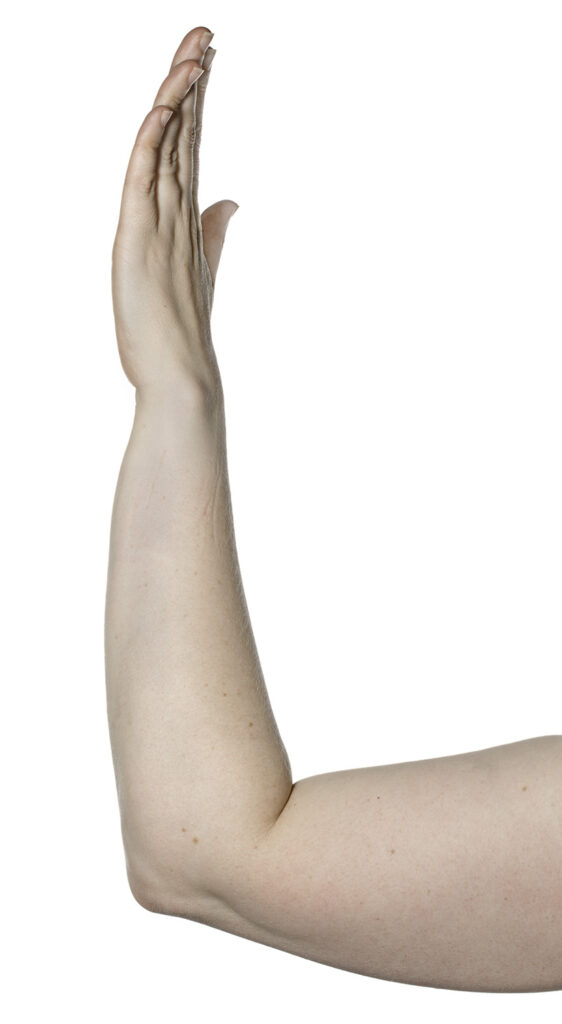
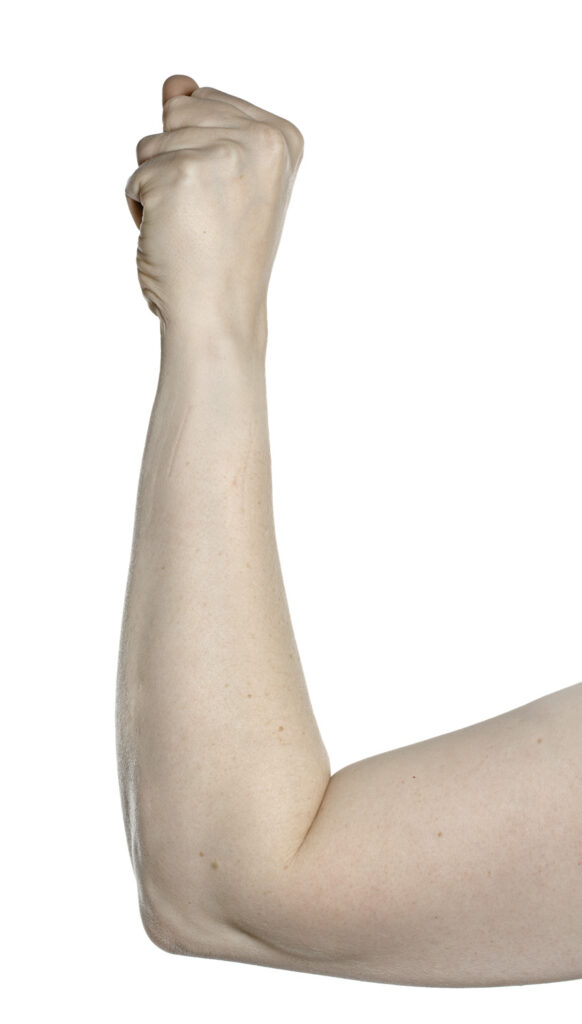
2. Close your had to make a full fist.
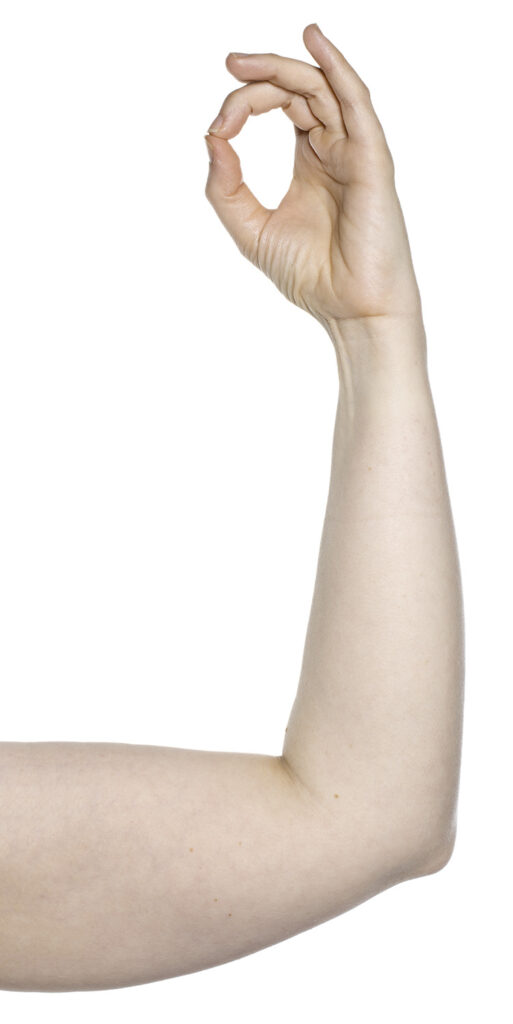
3. Rest your elbow on the table. Touch each fingertip with your thumb.
Complete 10 repetitions of each exercise 4 times a day.
Regularly touching the numb area helps to improve nerve recovery in your finger or thumb.
Massage also helps make the scar more mobile so it does not limit movement of the fingers or thumb. Once the stitches are removed and the wound is dry you can start to massage the scar.
Use a simple non-perfumed light moisturiser to massage the scar in circular movements.
Do this at least 4 times a day for 5 minutes.
A review appointment will be made in the hand therapy department for 6 weeks after your operation to check your movement and the recovery of your nerve.
Contact the therapy department admin team:
Contact the plastic surgery department if you still have an open wound and are concerned that you have a wound infection. Signs of infection are:
The Hand Therapy Team
Telephone: 01274 382874
Monday to Thursday 8.00 am – 6.00 pm, Friday 8.00 am – 3.30 pm
The Plastic Surgery Department
Telephone: 01274 364397
Monday to Friday 8.00 am – 5.00 pm
After an injury it is normal for the tissues in your body (joints, muscles, ligaments, tendons and skin) to respond with pain and swelling. Following the advice in this leaflet, especially in the first 72 hours, can help your recovery.
Swelling is a natural and important part as it starts the repair process. However, swelling contains natural chemicals that produce pain and further swelling in the injured area and will make the healing tissues feel stiff. This stiffness can prevent necessary movement.
If you are waiting for an appointment, or have recently had some surgery, you can use the advice in this leaflet to help to decrease the pain and swelling after your injury.
It will also allow a more comfortable plaster or splint to be fitted, should one be necessary.
Protecting the injured area is particularly important for the first three - five days. Your movement may be restricted by a splint or strapping and it is important to wear this as advised by the hospital staff. If it becomes uncomfortable (too loose or too tight) then please contact the department that gave it to you.
Whilst rest initially prevents stress on healing tissues, some stress (light movement) is necessary to allow the new tissue to heal well. Early movement may decrease the need for pain medication and allow earlier return to normal activity.
Regularly move the unaffected parts as much as your pain will allow.
Movement of the injured area should be guided by the medical professional.
Cold treatments can be used on injuries that have not broken the skin. Ice must not be used on an open wound.
Cooling the injured area can help with pain and may help to reduce the swelling. Examples of cold treatment are:
Remember ice can burn. Please follow these safety procedures:
Do not:
Use the ice on open wounds, dressings or areas of numbness.
Use ice if you have Raynauds syndrome, sickle cell anaemia or peripheral vascular disease.
Do:
Remove the ice pack immediately if there is any sensation of burning.
Avoid resting with your arm by your side or on your lap, as this will increase the swelling in your arm/hand.
Whenever possible try to raise your arm by resting with your arm supported on cushions, so that your hand is higher than your heart.
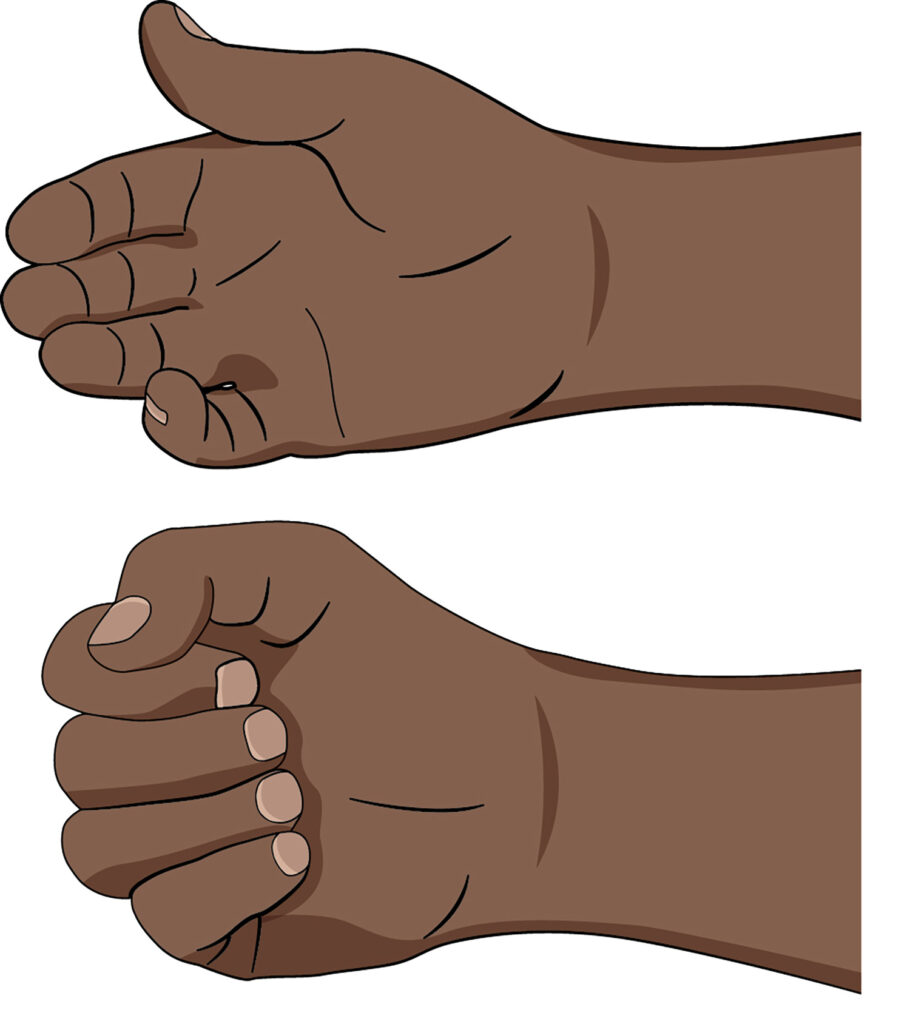
If you have a swollen wrist or hand, you can reduce this by squeezing and pumping the swelling out of your hand by curling your fingers into your palm, as if you are going to make a fist, and then straightening them out again.
Try to do these exercises between 10 and 15 times every hour.
After the pain and swelling starts to reduce, it is important to gradually increase the use of the affected area and return to your normal activities.
It is normal to have some discomfort when you start to become more active. It can take up to six to eight weeks for the injury to heal and at least three months to feel strong enough for normal use. During this time, it is important to regain your movement. Using your arm and hand will help to regain your strength. It may take several months for your strength to return to normal.Please be guided by the health care professional managing your care and follow any further instructions that they may give you.
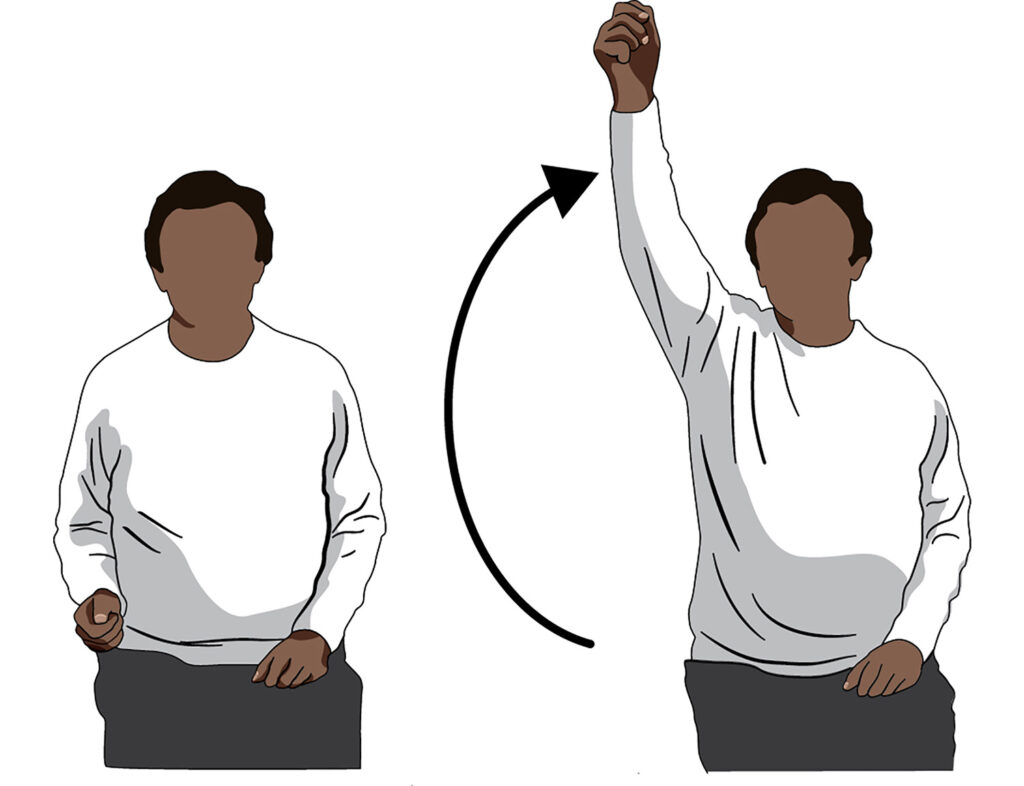
Raising your arm to stretch the shoulder upwards will help the stiffness of your arm joints and improve circulation.
Try to do these exercises between 10 and 15 times hourly.
If you have any concerns, for example – any increase in pain after the PRICE treatments or if you have suffered an ice “burn”, please contact the clinic/department where you have been seen or the Emergency department.
Physiotherapy
Tel: 01274 382875
Monday to Friday between 8.00 am and 3.30 pm
Plastics Trauma clinic
Tel: 01274 364397
Monday to Friday between 7.30 am and 5.00 pm
This booklet has been designed to help you exercise safely at home. It can be used with the British Heart Foundation (BHF) online videos that are free to access and will guide you through your exercise session.
Before you start any exercise, it is important that you have had an assessment with your cardiac rehabilitation team to work out how much exercise you can safely do at home and to determine which exercise video you should follow.
It is really important that you have read and understood the information in this booklet and that you know which level of exercise you should start.
If you have any questions please contact the cardiac rehabilitation team who will be able to help you. They can be contacted on: 01274 364348 or for people with hearing or speech difficulties, you can contact them using the Relay UK app. Textphone users will need to dial 18001 ahead of the number to be contacted.
Please follow the advice below prior to starting any exercise:
Before you start any exercise, make sure you feel rested and feel well. You should not start any of the exercises and should contact your GP or the cardiac rehabilitation team if:
The warm up should last 15 minutes and prepares your body for exercise. The gradual build-up of activity improves the blood flow to the heart and working muscles. This helps the oxygen to get to where it is needed.
The stretches at the end of the warm up improves your range of movement.
Your warm up should involve moving your arms and legs in most directions and should include:
This is the main part of the exercise session and should last 20 minutes.
This will help tone and strengthen your muscles and improve your heart’s efficiency.
You will be able to progress through the different levels identified on the BHF videos after advice from your cardiac rehabilitation team. If you do not have internet access, exercise level sheets will be sent to you.
This part of the exercise session should last for 10 minutes and is about gradually slowing down the exercises so that your heart rate and blood pressure return to normal, as they will both have risen whilst you have been exercising.
You repeat the stretches done in the warm up to try and help prevent any stiffness which you might feel later, and to improve your flexibility.
During your assessment with the cardiac rehabilitation team, you should have discussed the Borg scale rating of perceived exertion (RPE) and how you should use it.
This is a safe and effective way to help you measure how hard your body is working when you exercise i.e. how heavy and strenuous the exercise feels to you and how tired you are.
The perception of exertion is mainly felt as strain and fatigue in your muscles, as breathlessness or some aching during exercise.
Using a scale from 6-20, you choose a rating number to describe how hard the activity feels. You base the number on how tired you are, how hard it is to breathe and how hard it is to do the exercise.
You should think about your RPE during the warm up, so you know you are at the right level to start the conditioning phase. During the conditioning phase you should record your RPE number every five minutes on the exercise level sheet sent out to you.
Try to rate your feeling of exertion and fatigue as spontaneously and as honestly as possible.
On the onset of chest pain, discomfort or tightness sit down and rest for 1-2 minutes. If the pain persists then spray GTN under the tongue once, close your mouth and relax.
Wait 5 minutes.
If pain is still there, repeat the GTN spray as above.
If after 10 minutes you continue to have pain please contact 999, they will advise a further spray while you wait for the ambulance crew to arrive.
When you are exercising it is normal to feel:
You should slow down and make the movements smaller if:
If your RPE does not go down when you have tried to slow down and reduce the movements for a few minutes, walk on the spot slowly.
If you are still feeling short of breath after a couple of minutes, stop and sit down in a supportive chair.
You should also stop, sit down, and not resume the exercise session again if:
You can resume exercise tomorrow if the above symptoms have resolved.
Physiotherapy Department
Bradford Royal Infirmary
Duckworth Lane
Bradford
BD9 6RJ
Tel: 01274 364 348
Monday to Friday 8.00am to 5.00pm