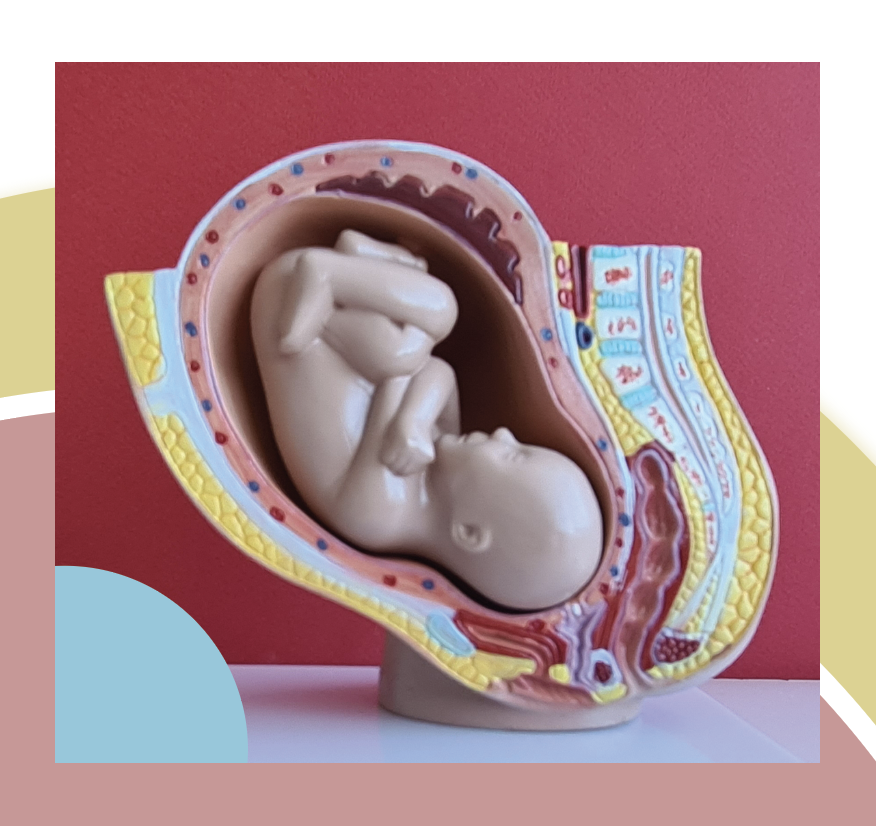
Image: Model of a baby in the womb, the space around the baby is where the amniotic fluid can be found.
Polyhydramnios means having too much amniotic fluid, which is the water around your baby, during pregnancy. Amniotic fluid is important because it protects your baby and helps them grow and move. Doctors diagnose polyhydramnios using an ultrasound scan. Polyhydramnios is diagnosed when:
It can be mild, moderate, or severe, depending on how much extra fluid there is. Most women who have polyhydramnios have the mild form, which often causes no symptoms.
Having extra fluid can sometimes make pregnancymore complicated.
Risks for the baby:
Risks for the mother:
It is important to remember that many women with polyhydramnios have healthy pregnancies and babies. Careful monitoring helps reduce risk.
In around half of pregnancies where polyhydramnios is
identified, no clear cause is found. This is known as idiopathic polyhydramnios.
Sometimes it may be linked to:
Mother’s health: developing diabetes as a result of pregnancy known as gestational diabetes , certain infections, or rare medication side effects
Baby’s health: problems with swallowing or digestion, genetic conditions, or growth concern
Placenta: rare placental tumours
A midwife will offer you an abdominal assessment at your routine antenatal appointments and at any attendance you may have through the Maternity Assessment Centre or Antenatal Day Unit. If polyhydramnios is suspected due to your bump measuring larger than expected and it is difficult to feel your baby’s position, you may be offered an ultrasound scan.
If you are already having routine ultrasound scans in pregnancy to monitor your baby’s growth, the amniotic fluid volume is routinely measured during these scans.
If polyhydramnios is confirmed, your care may include:
Many women have no symptoms. However, if you get symptoms they may include:
If symptoms are severe, your care team will discuss additional treatments, which may include drainage of some fluid at a specialist unit. This is not commonly needed.
If you have polyhydramnios:
Most women can have a vaginal birth, but occasionally a caesarean section may be recommended.
Call your maternity unit straight away if you have:
This leaflet is based on guidance from the Royal College of Obstetricians and Gynaecologists (RCOG) and local hospital protocols at Bradford Teaching Hospitals.
You can contact us using the Relay UK app. Textphone users will need to dial 18001 ahead of the number to be contacted.
Bradford Teaching Hospitals NHS Foundation Trust is a smoke-free organisation. You are not permitted to smoke or in use e-cigarettes in any of the hospital buildings or grounds.