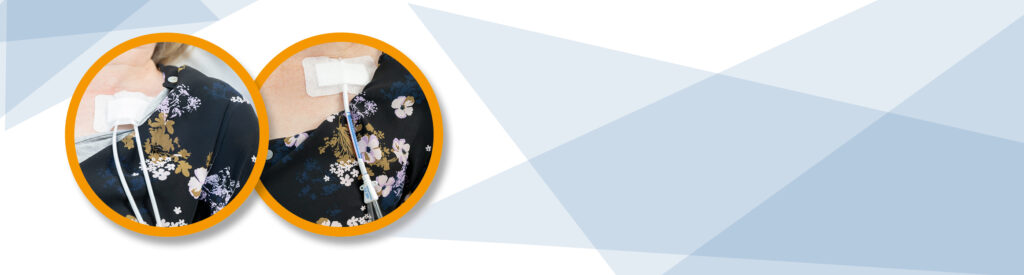
The person you care for has a new dialysis line. We often call a dialysis line a “lifeline” as it is used for dialysis treatment to keep people healthy when they have kidney failure. But lines can cause problems.
This leaflet will explain what can go wrong and what to do if that happens. It is important that you read this information as soon as possible, so you know what to do if there is an emergency.
The dialysis line enters a large blood vessel usually in the neck and the tip sits in the largest vein in the body near the heart. This allows direct access to the bloodstream so that the dialysis machine can clean the blood. A dialysis line can stay in place for months or years.

The dialysis line may become infected. Signs of infection include:
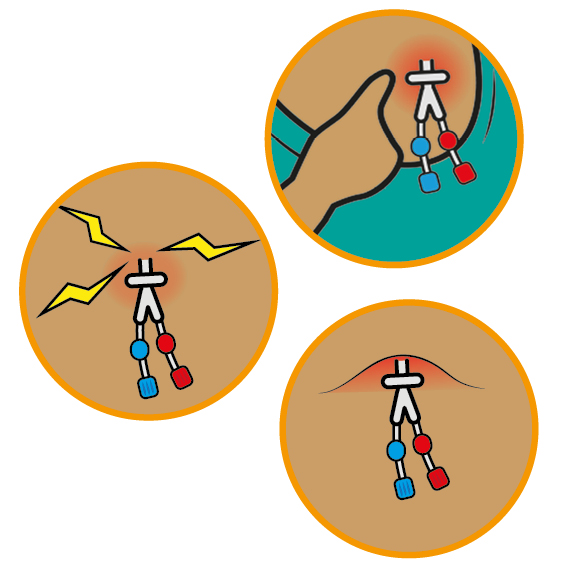
If there are any signs of infection you must telephone the dialysis unit as soon as possible or ring 999 so that a rapid assessment can be made.
A visit to the Emergency Department may be advised for a thorough medical assessment. This is important because an infection can cause serious illness and antibiotics may be needed.
The line will be held in place with stitches or a plastic securement device for up to three months.
But the dialysis line can slip out from under the skin. If the line seems longer, or the small cuff is coming out of the skin then you must ring the dialysis unit.
Line movement can be very dangerous and medical staff may need to secure it. The line may need to be replaced urgently.
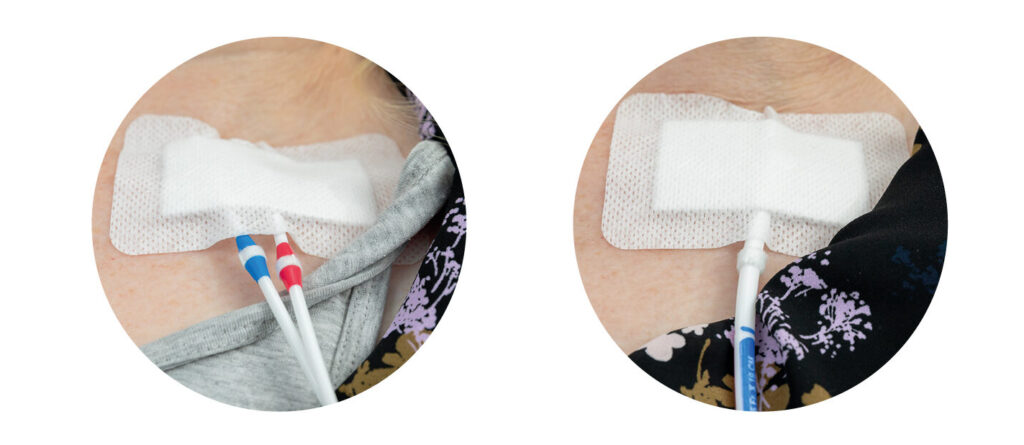
The dressing over the line may be irritating. It is really important not to touch the dressing, as this can increase the risk of infection. The dressing should only be touched by dialysis staff. If the dressing causes itching or sore skin, the person must try to avoid scratching or rubbing the area. Let the dialysis staff know as they may be able to use a different dressing which does not irritate the skin.
The line must be kept dry all the time, it is important to make sure that the line doesn’t get wet when having a shower. Dialysis staff will be able to advise about plastic coverings to keep the line dry. Having a bath is not advised as there is high risk of the line becoming wet.
It may take time to adjust to having a new line, which is completely normal. Some people pull the line, tamper with it or even cut it if they find it irritating or are confused by it. It’s really important to reassure them and discourage them from pulling the line, playing with it or even cutting it. We advise to keep sharp objects away from the line. There is a risk of dangerous bleeding if the line is pulled or cut.
If the line is pulled out by accident, you must press over the neck and call 999 straight away.
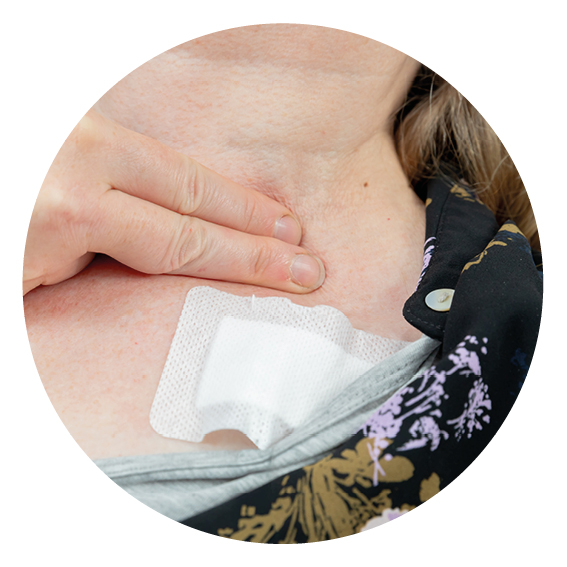
If the line is cut or there is blood coming out, you must:
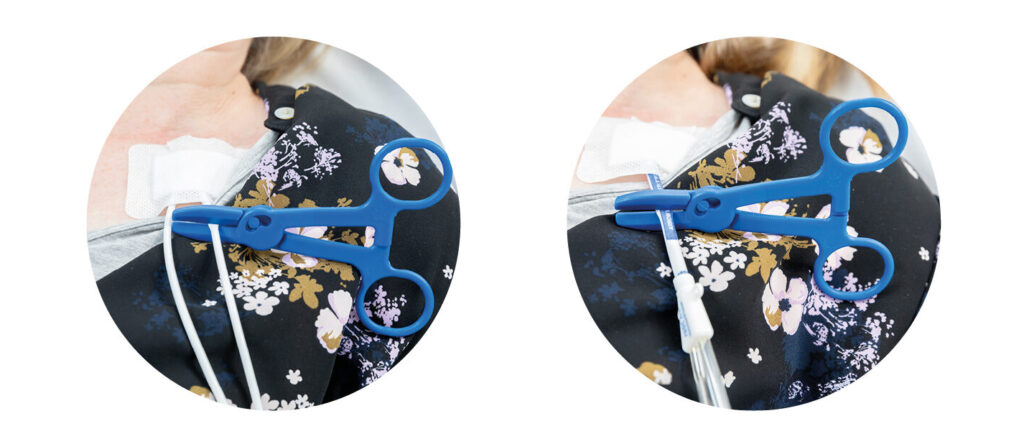
If the person is breathless or has chest pain or feels faint or dizzy, you must help them to lie down with their feet raised, while pinching or clamping the line. This is to stop air from entering the line.
Make sure that the clamp is kept in a safe place where it can be easily found in case of emergency.
Dialysis staff will be able to advise you what to do if you have any of these emergencies. But when dialysis staff are not available, you must ring 999 for emergency help. You must not feel any embarrassment in ringing 999 or feel like you are wasting their time. These can be serious problems which need to be reviewed urgently by experienced professionals. If paramedics need to assess the problem, they can ring the dialysis team for advice. You can share the emergency contact numbers with the paramedics if they need to ring the dialysis team.
St Luke’s Hospital Haemodialysis Unit 01274 365692 or 01274 365689 available Monday to Saturday from 7.00am until 10.30pm and Sunday from 7.00am to 5.30pm
Skipton Dialysis Unit 01756796218 available Monday to Saturday from7.00am until 6.15pm
Outside of opening times ring 111 or 999
You can contact us using the Relay UK app. Textphone users will need to dial 18001 ahead of the number to be contacted.
Bradford Teaching Hospitals NHS Foundation Trust is a smoke-free organisation. You are not permitted to smoke or in use e-cigarettes in any of the hospital buildings or grounds.