Labour can be painful but there are options available that can help. It is a good idea to know what they are before you go into labour.
You may find that learning as much as possible about labour and talking to your midwife will help you stay calmer. You can also attend antenatal classes to gain more information.
You may have very clear ideas about what pain relief you want and what you don’t want, which is helpful. However, you may find that some methods may not work for you and you may want or need other pain relief options on the day.
Non-drug methods:
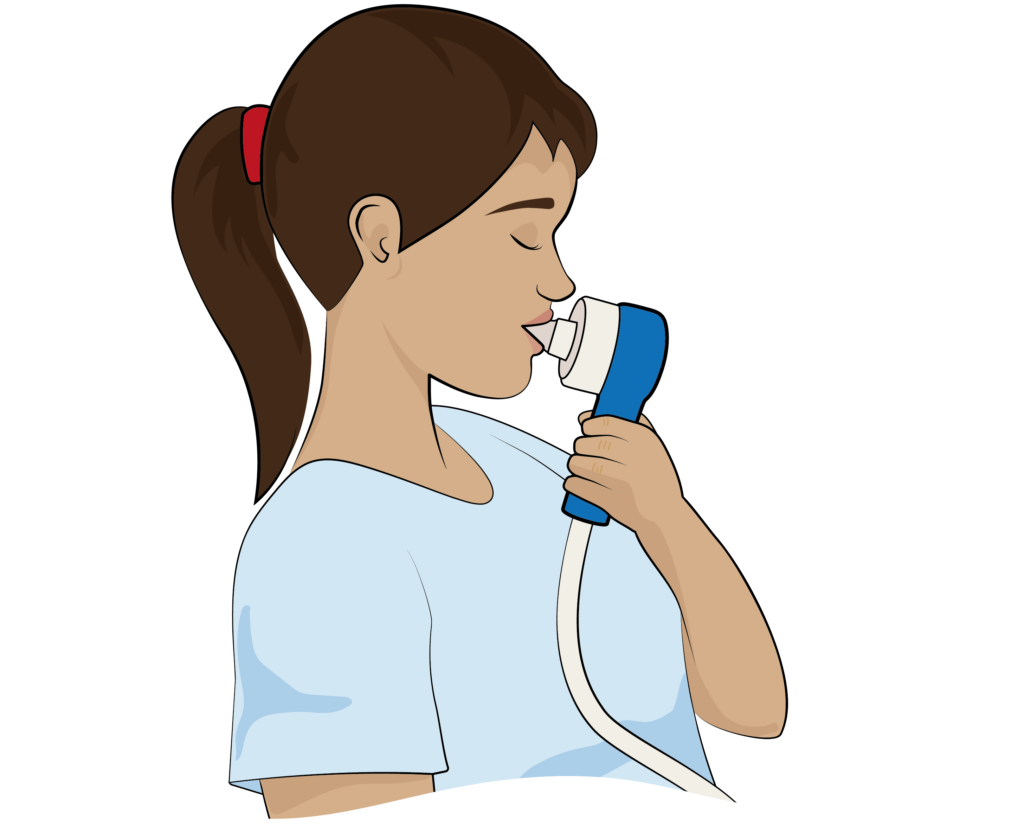
This is a mixture of oxygen and nitrous oxide that you breathe in using a mouthpiece, as soon as the contraction begins. It acts quickly and takes the edge off your pain, it is easy to use and doesn’t affect the baby. However, it doesn’t get rid of pain completely. It may make you feel light-headed, sick or sleepy and you may need other pain relief methods.
Pethidine or diamorphine can be given as injections in the muscle, normally into the thigh or buttock, to help with pain. It can also help you to relax. The effects last for up to four hours so these can be useful if you’re still in active first stage of labour but not if you’re close to starting to push. They might make you feel sick or drowsy. You may need an intravenous cannula in case you need anti-sickness medication. They may also affect your baby’s breathing after birth and your baby may be drowsy.
Remifentanil is a very short acting opioid that goes into a drip in your arm. You can control it yourself by pushing a button at the beginning of the contraction. It works very quickly and wears off within a couple of minutes. Like other opioids it can make you feel sleepy, sick or dizzy and it can also affect your baby’s breathing although this usually wears off quickly. You will need close monitoring of your breathing by a midwife and a probe on your finger to check oxygen levels. Occasionally, women on this drip need additional oxygen through nasal specs.
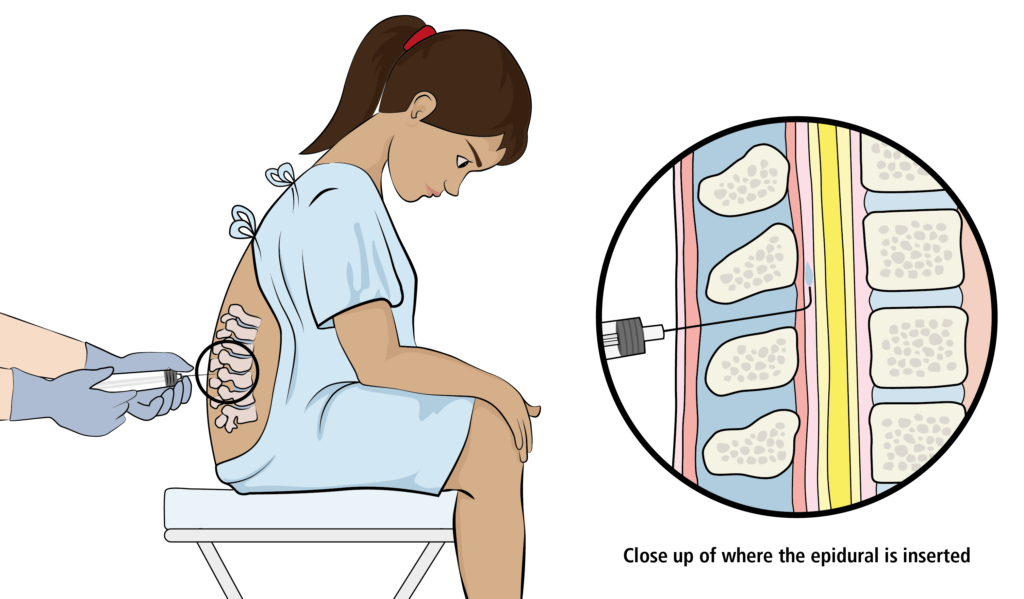
Epidurals can be the most effective method of pain relief for labour. An epidural catheter is a tiny plastic tube that is placed using a needle into the epidural space in your back by an anaesthetist. Local anaesthetic and strong pain killers can be given through the catheter during your labour to provide you with pain relief. You can only have an epidural inserted on the labour ward, and both you and your baby will require close monitoring. An epidural may take 40 minutes to work and give you pain relief. Having an epidural can increase the chance of needing forceps or ventouse to help deliver your baby. An epidural can be topped up to provide anaesthesia and pain relief if you need an instrumental or caesarean birth. Epidurals can cause side effects such as headache, itchiness and difficulty urinating. If you want to learn more about epidurals visit www.labourpains.org, ask your midwife or the labour ward anaesthetist.
If your baby needs to be born in theatre you will need stronger pain relief. If you already have an epidural that is working well, it can be used to give stronger medication. If not, you might need a spinal anaesthetic (injection of local anaesthetic) in your back, or a general anaesthetic which would mean you would be asleep when the baby is born. An anaesthetist will assess you and discuss the anaesthesia with you.
Anaesthetists are doctors who provide pain relief and anaesthesia. There is always an anaesthetist on the labour ward, and they can do epidurals, set up patient-controlled analgesia or discuss pain relief options with you. They are also in charge of assessing you and keeping you comfortable and safe if you need to go to theatre. Occasionally, you might meet an anaesthetist if you have health problems that can affect labour or if you become unwell.
Caesarean births can be planned in advance or done as an emergency.
It is normal to have some pain or discomfort after a caesarean birth. However, with regular pain relief, we hope to keep this controlled, and you should feel comfortable enough to move about and look after yourself and your baby.
Taking painkillers is an important part of helping you recover quickly. Good pain control is important for you and your baby.
If you are having a planned caesarean birth, before you come into hospital, you will need to buy a packet of paracetamol and ibuprofen from the chemist if you can use them. Make sure you have a supply ready for when you go home.
On the day:
During your recovery:
Important messages:
Consider taking laxatives for up to one week after the procedure.
You can contact us using the Relay UK app. Textphone users will need to dial 18001 ahead of the number to be contacted.