
Wound care advice following your pacemaker/defibrillator procedure
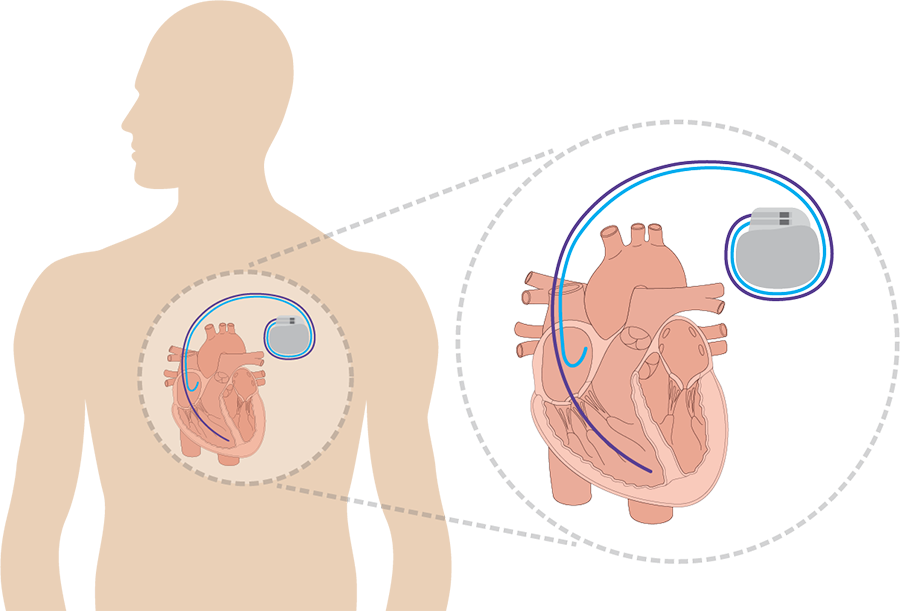
Who is this leaflet for?
This leaflet is for patients who have a new wound following a cardiac device procedure after the implantation of:
- Pacemaker (PPM)
- Implantable cardioverter defibrillator (ICD)
- Cardiac resynchronisation therapy pacemaker (CRT-P)
- Cardiac resynchronisation therapy defibrillator (CRT-D)
- Box change or a revision procedure
What should I expect?
Following your procedure you will have:
- Discomfort for the first few days, which can be relieved with standard painkillers
- Bruising around your implant site
For 6 weeks after a new implant (does not include box changes)
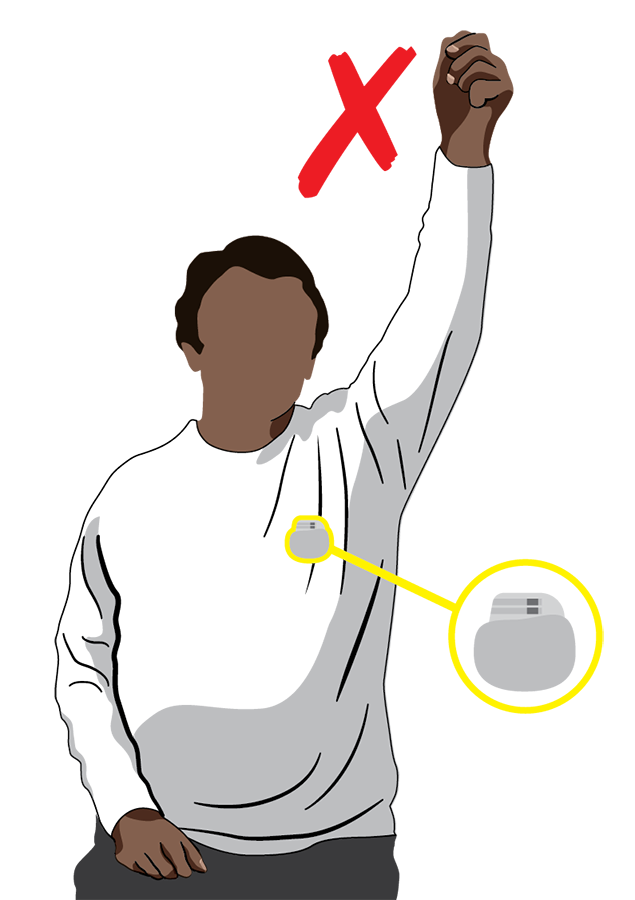
- Avoid heavy lifting, manual work and reaching and stretching movements with the arm on the side of your pacemaker.
- Avoid movements where your arm is raised above your head.
Unsafe arm movements after implant above shoulder
Cardiac Devices Team: 01274 364073
Monday to Friday between 8.30am- 4.30pm – but not bank holidays
How is my wound closed?
Your wound will be closed with absorbable sutures, which means that you do not need to have them removed. A dressing with an absorbent pad or skin glue will then be applied on top.
Rarely a non-absorbable skin suture will be used, but you will be given clear instructions as to when and where these should be removed.
What should I expect?
Following your procedure you will have:
- Discomfort for the first few days, which can be relieved with standard painkillers
- Bruising around your implant site
How do I care for my wound?
- Dressing, if possible, please leave the original dressing in place for one week following your procedure. If the dressing becomes unstuck you must wash your hands, remove the dressing, wash hands again and then re-apply a new dressing. You must make sure that you do not touch the wound or pad of the dressing.
- Small adhesive strips also known as steri-strips, will gradually start to loosen in the weeks following your implant and can then be gently removed.
- Wounds, keep your wound dry for at least 3 days, but up to a week if possible. If water does come into contact with the wound, dab the site dry with a clean towel.
- Skin Glue, over the next few days this will start to look dry and flake away from the wound, this is normal. Do not rub or pick at it, and do not apply any creams to it.
- Routine dressing changes and wound cleaning is not necessary and should be avoided as this could cause an infection.
What should I look out for?
Look out for any of the following symptoms:
- Signs of infection such as redness, heat, swelling, temperature
- Haematoma which is swelling caused by blood under the skin
- Excess bleeding or fluid discharge from your device site
- Skin reaction
Long Term Pacemaker Site Advice:
As part of your long-term care plan, the majority if not all your appointments will be virtual, so we advise you to monitor the device site regularly and contact us if you notice any of the following:
- Pain or Discomfort:
- Persistent or worsening pain at the site
- Changes in Appearance and Mobility:
- The skin surrounding the device should be mobile
- Device or leads becoming more visible or protruding from the skin
- Skin thinning or eroding over the device causing a change in skin colour.
- You or your family members may be asked to take a picture of your wound to help diagnose and keep track of changes at your device site
Any sporting activity should be undertaken with caution, particularly on the side of the pacemaker. Sports involving repetitive arm movements above chest level should be avoided. This can be discussed further at your follow up appointment.
Who should I contact if I have any concerns?
You will have a face-to-face appointment within 4-6 weeks following your device being implanted. In the meantime, if you have any concerns surrounding the wound or feel unwell, please contact the pacemaker clinic before your scheduled appointment.
You may also be asked to visit the department for a wound review if this is considered necessary.
Where possible, please contact us directly rather than speaking with your GP, Practice Nurse or District Nurse. Pacemaker wound infections can progress to a more serious widespread infection if not treated promptly.
Further information:
Further information and support are available from the following websites:
British Heart Foundation (BHF) www.bhf.org.uk
The NHS website www.nhs.uk
Pumping Marvellous: Useful resources for CRT patients https://pumpingmarvellous.org/
Home monitor helpline numbers:
Medtronic (BeConnected) helpline number: 01923 202 543
Abbott (Merlin) helpline number: 0800 3892714
Boston (Latitude) helpline number: 0800 6781644
People with hearing and speech difficulties
You can contact us using the Relay UK app. Textphone users will need to dial 18001 before the number to be contacted.
Accessible Information
If you need this information in another format or language, please ask a member of staff.
Smoking
Bradford Teaching Hospitals NHS Foundation Trust is a smoke-free organisation. You are not permitted to smoke or use e-cigarettes in any of the hospital buildings or grounds.