
Your Colonoscopy – see inside, find out what is wrong
This quick guide lists the key points you need to know before having a colonoscopy. For further information:
visit https://www.bradfordhospitals.nhs.uk/endoscopy
or call us for a more detailed patient information booklet to be sent to you in the post
What is a colonoscopy?
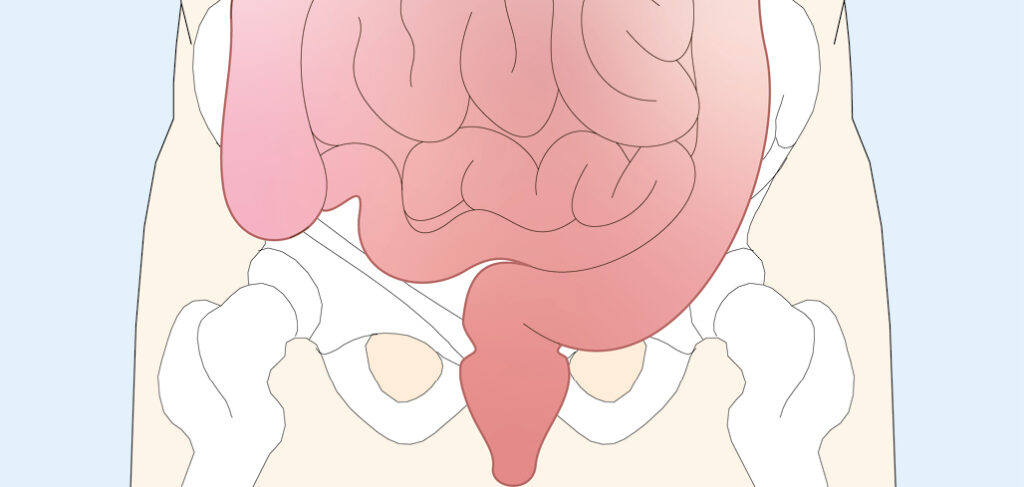
A thin, flexible camera tube is inserted through your bottom, also called your anus, which gently checks the entire large bowel. This usually takes between 30 and 45 minutes.
Why have a colonoscopy?
This procedure is done to find the causes of bleeding, pain, or bowel habit changes so you can start the right treatment. Small polyps can be removed during the procedure to prevent problems in the future.
Who performs the procedure?
A specialist nurse or doctor will perform the procedure. Trainees may watch or perform the procedure, but always under appropriate supervision. We will ask you if you are happy for them to watch or perform.
Is it painful?
Everyone is different but most people tolerate it well. Sometimes there may be brief episodes of moderate discomfort due to stretching and cramping of the bowel. This usually passes quickly. If it is too uncomfortable, we will always stop if you ask us to.
Most people feel fine within an hour.
Choosing pain relief
These are your options for pain relief during the procedure. The table compares them to help you choose and will be discussed with you at your pre-assessment appointment.
Your options for pain relief
How you will feel
Relaxed and sleepy. You may be a bit forgetful but this is normal
How is it given
Through a cannula into the blood stream
Will you need someone with you afterwards?
You will need someone to take you home and stay with you overnight
Can you drive?
No driving or alcohol for 24 hours
How you will feel
Pain relief, stay alert. You remember everything
How is it given
Through a cannula into the blood stream
Will you need someone with you afterwards?
No
Can you drive?
No driving or alcohol for 24 hours, but could go home in a taxi
How you will feel
Inhale as needed for pain relief. This has an instant effect and goes in minutes
How is it given
Breathed in
Will you need someone with you afterwards?
No
Can you drive?
No restrictions
How you will feel
Fully awake and aware
How is it given
Through a cannula into the blood stream
Will you need someone with you afterwards?
No
Can you drive?
No restrictions
Getting ready
It is important to prepare well for your procedure. Having a clean bowel allows us to do a more thorough examination as we can see the bowel more clearly.
- Telephone pre-assessment – this will happen 1-2 weeks before your procedure. A nurse will give you a laxative plan and answer any questions you may have.
- Collect laxatives and written information from the Endoscopy Unit
- Follow the instructions exactly – you will be given a strong laxative and a low-fibre diet for 3 days before your procedure. The laxatives are strong and you will need to be near a toilet.
- Day of your procedure – do not eat any food on the day of your procedure. The only drinks you can have are clear fluids until 2 hours before unless you are also having an examination of your stomach. Continue to take your normal medication unless you are told not to.
Do you have diabetes, a stoma, a pacemaker, or take blood-thinners? You will be given advice at your pre-assessment clinic appointment but if you are concerned call us on 01274 276393.
Please remove nail varnish, so our monitoring equipment works. You will also need to bring your normal medication list, any immediate medications (like inhalers), and a book or magazine. Wear loose clothes for comfort.
On the day
- You will be welcomed by our receptionist who will confirm your identity and give you a wristband.
- We will have a quick chat to see if anything has changed since your pre-assessment appointment.
- We will answer any questions you may have and ask you to sign a consent form.
- You will be asked to change into a gown and paper pants which will be provided.
- A cannula will be placed in the back of your hand if needed for pain relief and sedation.
- You will be asked to lie on your left side, but you may have to change position.
- Tube glides in; air or water opens your bowel.
- Painless removal of biopsies or polyp if needed.
- Your procedure is complete.
- You will then rest and recover for at least 30 minutes.
- A nurse will discuss your results with you and a family member if you wish.
How long will it take?
Up to 4 hours to allow time for preparation, the procedure and recovery
Results
The results of the procedure and follow-up plans will be discussed with you before you leave, and you will get a written summary to take home. Any biopsy results will be sent to the hospital consultant who referred you for the test, usually within one month, but this can vary.
Going home
Sedation – rest, snack, escorted home. No driving for 24 hours.
Painkiller only – no escort for going home. No driving for 24 hours.
Entonox or none – you can leave the department. There are no restrictions.
Call us after you go home if you experience:
- Severe tummy pain
- Heavy bleeding from your back passage but some light bleeding is expected
- Fever 38°C or higher
If you have any of the symptoms above, seek urgent medical advice from the Endoscopy Unit (contact details on page 4) NHS 111, your GP or Emergency Department.
What are the risks?
A colonoscopy is generally a safe procedure, and there is always a good reason for doing it. It is not unusual to experience mild stomach pains during or after the procedure. More serious complications occur in less than 1 in 500 cases, and are more common if sedation is used or a polyp is removed. These include:
- A perforation or a tear through the bowel wall that may require surgery
- Bleeding
- Allergic reaction to the medication
- Heart and breathing difficulties such as a chest infection or a heart attack
Very rarely (less than 1 in 3,000) a complication is so serious it is life threatening.
No method of examining the bowel is perfect: in less than 5 out of 100 procedures we will not be able to examine all the large bowel and an alternative test will be discussed with you. Also 2-3 people out of 100 diagnosed with a bowel cancer each year will have had an apparently normal colonoscopy in the past 3 years.
If you are worried about having a colonoscopy because of the risks or feel you are not fit enough to have the procedure, please let us know by ringing us or telling us when you have your pre-assessment. The decision to have a colonoscopy is yours. There are alternative scans or tests that may suit you better even if they are not quite as good as a colonoscopy. These can be discussed with your doctor.
Contact numbers
Questions about your procedure?
Tel: 01274 276393
Monday to Friday
8.30am to 5.30pm
Change your appointment
Tel: 01274 273073
Monday to Friday
8.00am to 4.00pm
If you are unwell after the procedure (inside office hours)
Tel: 01274 276393
Monday to Friday
8.30am to 5.30pm
If you are unwell after the procedure (outside office hours)
01274 364413 (Ward 5) or NHS 111 or Emergency Department
24 hours a day
7 days a week
Frequently asked questions
- Will it hurt? See Is it painful?.
- Why can’t I be put to sleep? To put you to sleep for a procedure involves giving a general anaesthetic. This is not available routinely and it increases the risk associated with the procedure. It is not required for most of patients because the procedure is usually well tolerated.
- How long will it take? This procedure takes 30 to 45 minutes, but expect to be at the unit for up to 4 hours to cover your full care.
- When do I get my results? See Results.
- Do I need somebody with me afterwards? Yes, unless you have chosen not to have any sedation. See choosing pain relief.
People with hearing and speech difficulties
You can contact us using the Relay UK app. Textphone users will need to dial 18001 before the number to be contacted.
Accessible Information
If you need this information in another format or language, please ask a member of staff.
Smoking
Bradford Teaching Hospitals NHS Foundation Trust is a smoke-free organisation. You are not permitted to smoke or use e-cigarettes in any of the hospital buildings or grounds.
Wristbands
When you are in hospital it is essential to wear a wristband at all times to make sure you are safe during your stay. The wristband will show accurate details about you on it including all the information that staff need to identify you correctly and give you the right care.
If you do not have a wristband whilst in hospital, then please ask a member of staff for one. If it comes off or is uncomfortable, ask a member of staff to replace it.