
Extensor tendon repair: advice and exercises (Norwich regime)
This leaflet has been written to provide you with information following your surgery to repair your extensor tendons. A cut in these tendons, even if only part way through, is a serious injury. It is important that you follow the advice of your hand surgeon, therapist and this leaflet to achieve the best possible outcome.
Extensor tendons allow you to straighten your fingers and thumb. They run from muscles in the back of your forearm into your hand where they attach to the bones of your fingers and thumb. They are important in allowing you to open your hand during activity and are essential in allowing your hand to function normally.
Your tendon has been repaired to restore normal movement, and you will need to undergo a strict hand therapy programme following your surgery to maximise your recovery and functional use of your hand.
It is normal to have swelling in your hand after an injury or surgery.
To help drainage of this swelling whenever possible:
Do rest your hand above the level of your heart. Use a cushion to support your arm if this is comfortable.
Do move your elbow, shoulder and neck regularly to prevent stiffness in these joints.
Do not allow your hand to hang by your side.
Early movement of your fingers as described in this leaflet will help to manage your swelling and prevent stiffness later.
Splints
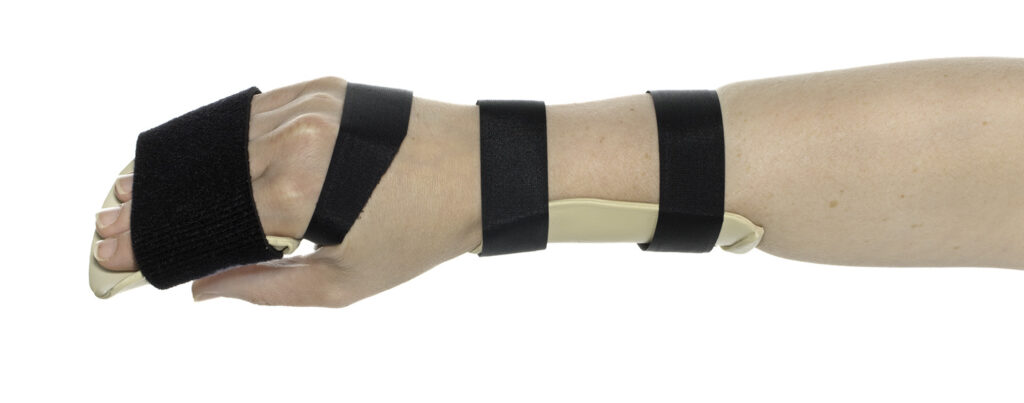
Hand and lower arm in a split
Within the first week following your repair you will be seen by the hand therapy team. A small yoke splint will be made and a separate wrist splint given to protect your surgical repair.
The repair will be weak and will require protection in a splint to prevent movements and activity that will risk rupturing your tendon. You should wear the splints 24 hours a day.
While wearing your splints you will need to check your skin on a regular basis for red or sore areas and inform your therapist if you have any concerns.
Your arm and splint will need to be covered with a plastic bag when showering or bathing. Please do not remove your splints.
Do not place your splint in hot water or near a heater as this will affect its shape/fitting and result in the splint becoming uncomfortable to wear.
You will not stop your tendon healing by moving your thumb and fingers. Bending and straightening your fingers will help regain movement and reduce swelling.
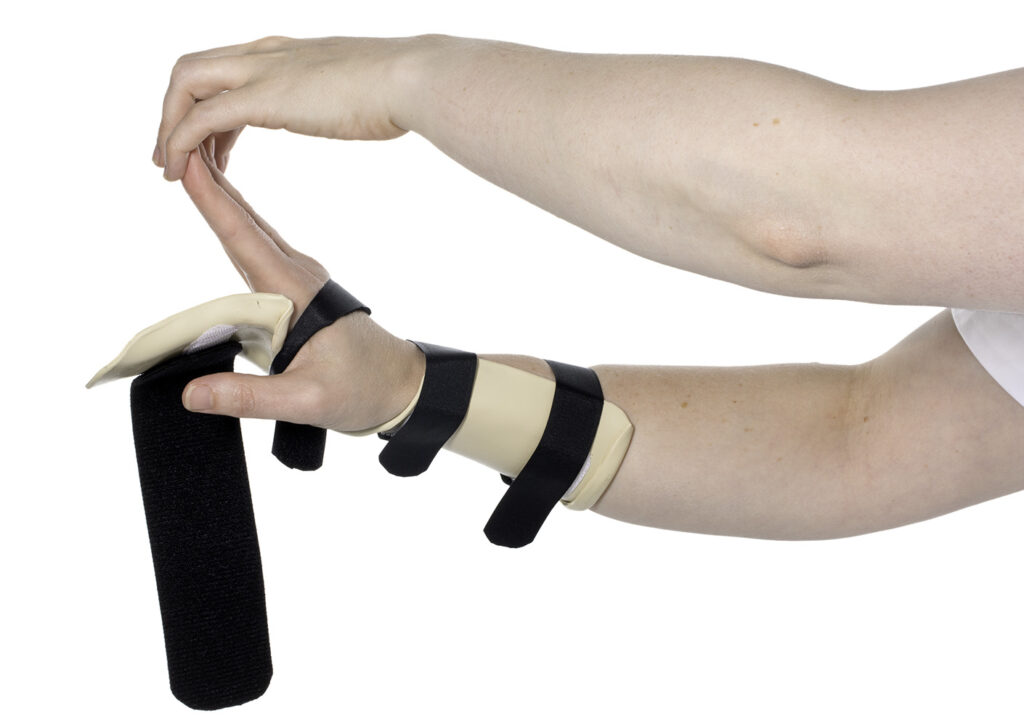
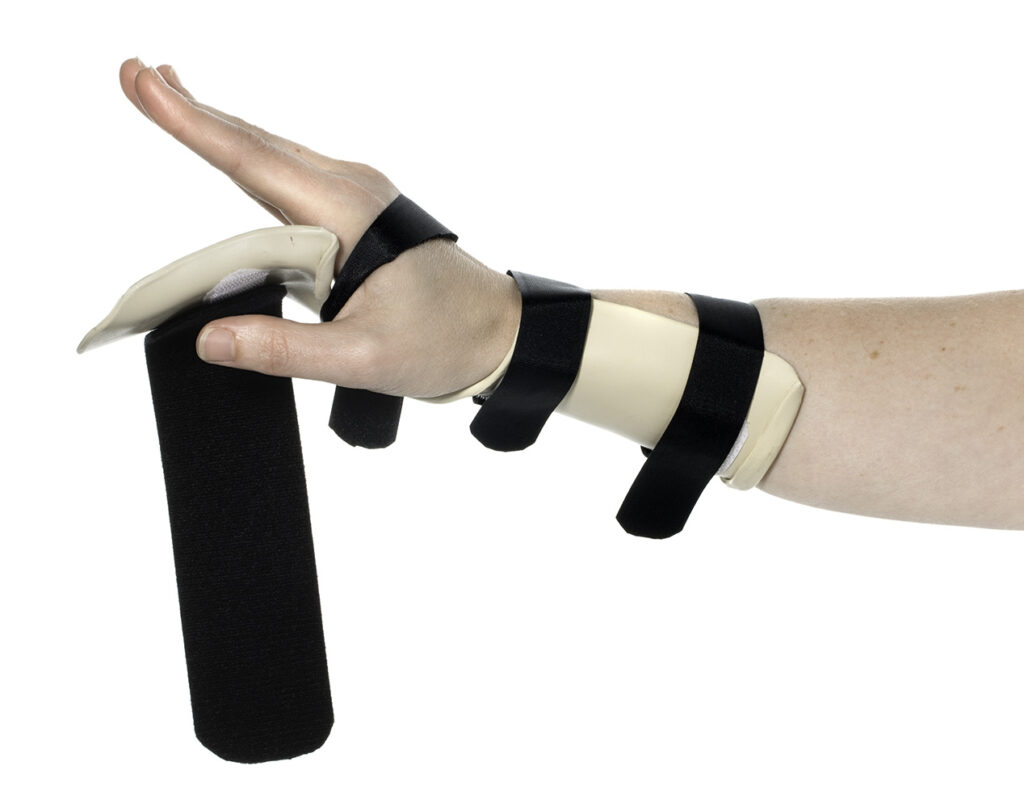
You should complete the following exercises wearing your splint:
1. With your other hand lift your fingers up away from the splint.
2. Actively straighten your fingers away from the splint.
3. Actively straighten your fingers away from the splint then curl your fingers.
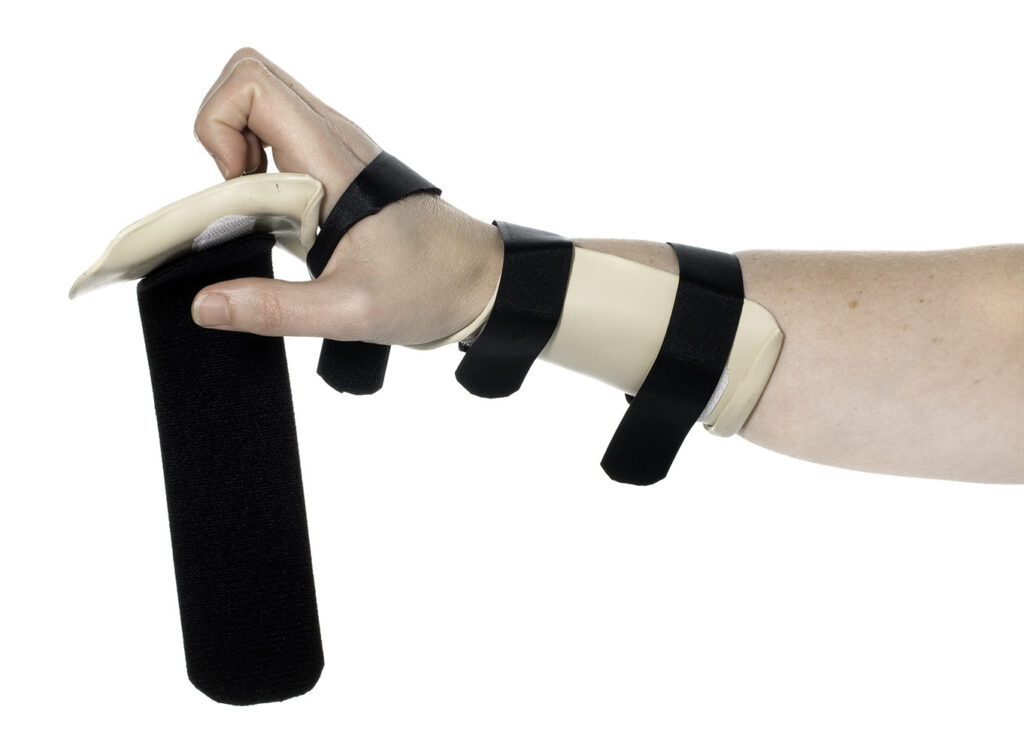
4. Curl your fingers.
Massage helps make your scar more mobile, so it does not limit movement of your fingers. Once the stitches are removed and the wound looks dry you can start to massage the scar.
Use a simple moisturiser such as E45, Nivea or aqueous cream. Massage the cream over the scar in circular movements.
Perform this 3-4 times a day for 5 minutes.
Dos
You can use your hand for light activities for example:
- doing up buttons/shoelaces
- dressing with light clothes
- holding paper
- using a mobile phone
Don’ts
You must not use your injured hand for heavier activities, such as:
- carrying a cup of tea or plate of food
- pulling up your jeans/trousers/shorts
- opening doors
- driving
You can stop wearing the splint during the day. Your therapist will advise you if you need to continue to wear the splint when you go to bed.
Exercises
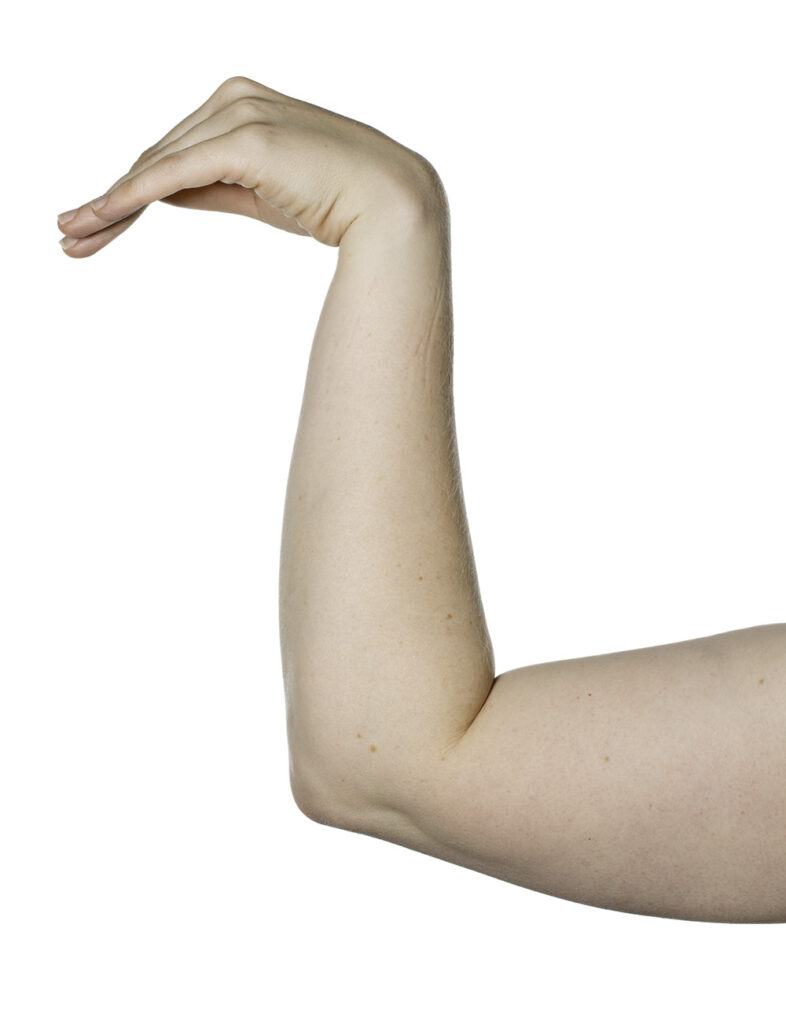
1. Support your forearm on a table. Bend your wrist downwards relaxing your fingers.
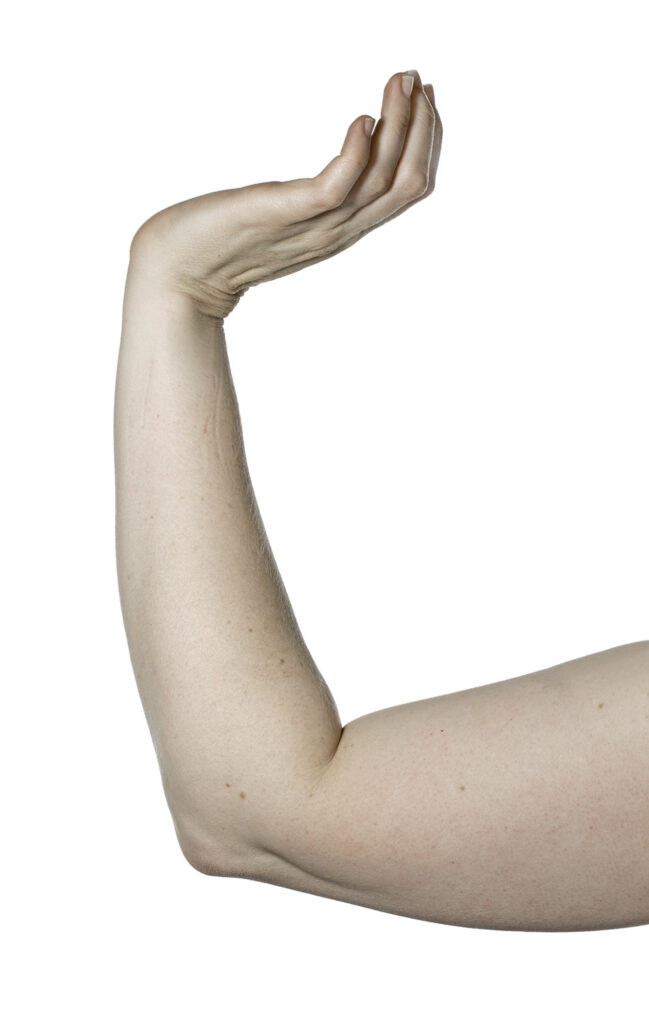
2. Support your forearm on a table. Bend your wrist upwards.
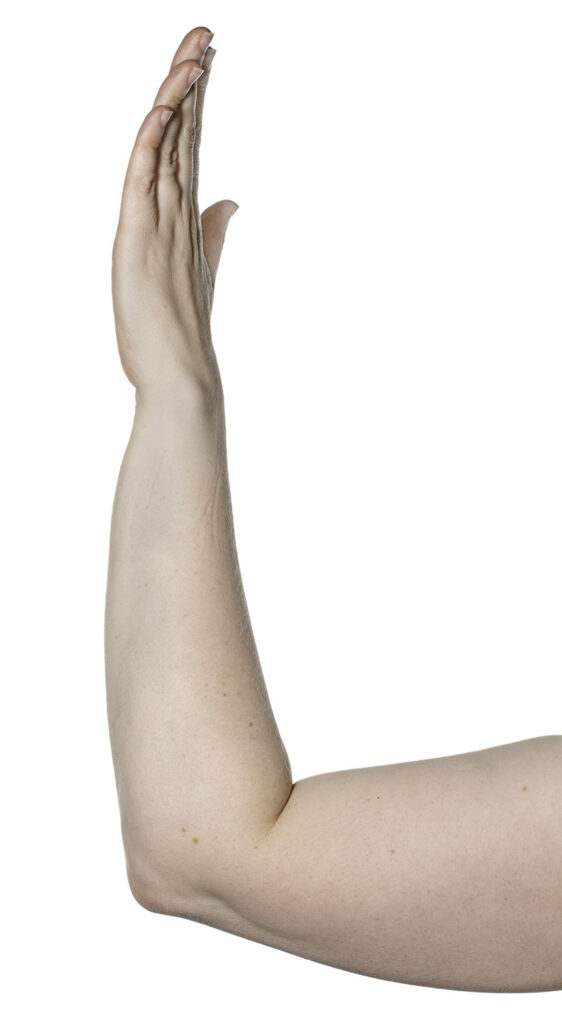
3. Rest your elbow on a table. Straighten your fingers.
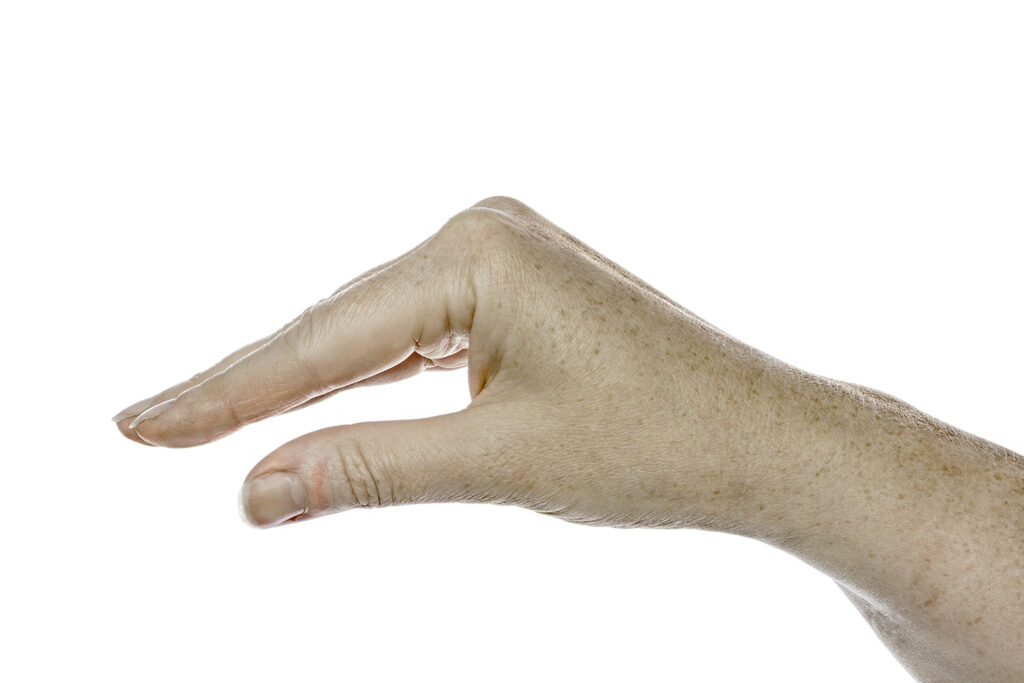
4. Rest your elbow on a table. Bend your fingers at the knuckles whilst keeping your finger joints straight.
5. Rest your elbow on a table, curl and open your fingers without making a full fist.
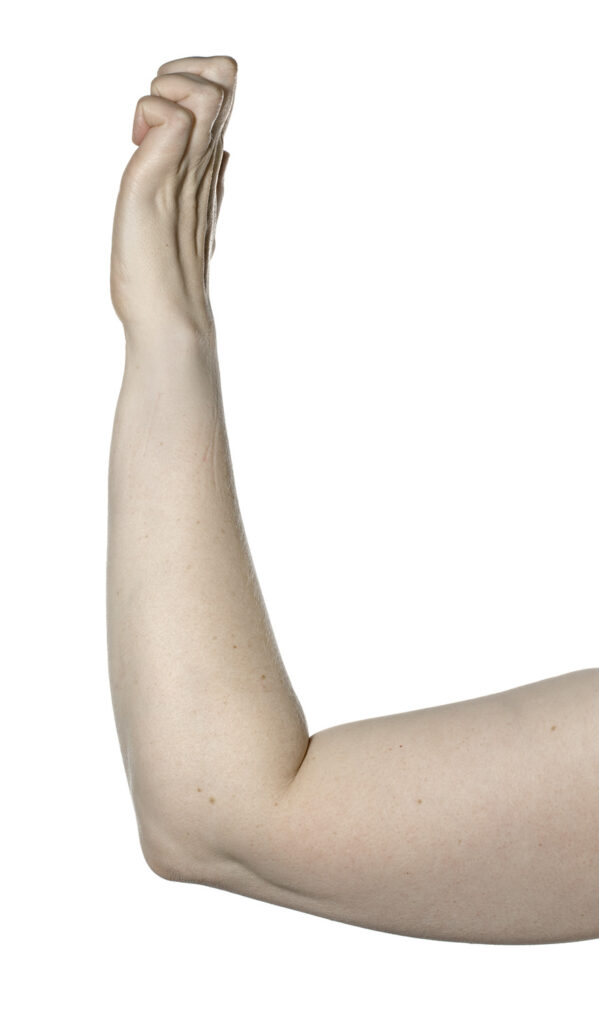
6. Rest your elbow on a table. Close your hand to make a full fist.
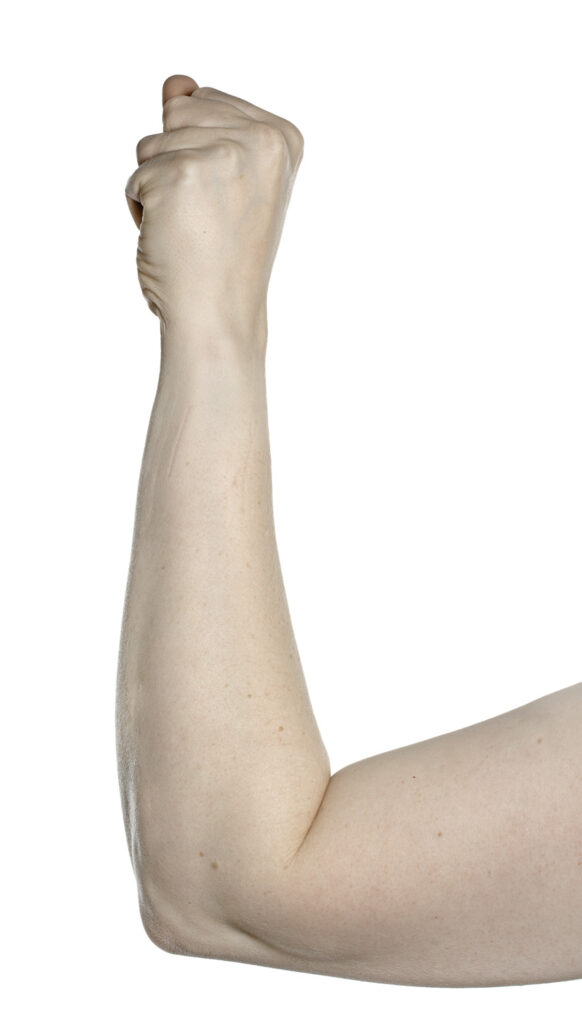
Dos
You can use your hand for medium heavy activities for example:
- carrying a cup of tea or plate of food
- pulling up jeans/trousers/shorts
- opening doors
- driving if safe
- cycling
Don’ts
You must not use your injured hand for heavier activities until you are 12 weeks following repair:
- heavy lifting/labour
- contact sports
Do not complete any activity that causes pain. Your tendon is not 100% strong until 12 weeks after repair.
Contact the plastics clinic or therapy department immediately if:
- You are suddenly unable to straighten your fingers.
- You still have an open wound and are concerned that you have a wound infection. Signs of infection are:
- increased redness around the wound
- redness spreading down your forearm
- throbbing, increased swelling
- a fever
- discharge from the wound that is foul smelling or coloured
- Your hand or fingers become more swollen, reddened, or blistered.
- Your splint becomes uncomfortable or is showing signs of rubbing or irritation such as redness.
Plastics clinic on 01274 364397 available Monday to Friday between 8.00am and 5.00pm
or
The Hand Therapy Team on 01274 382874 available Monday to Thursday between 8.00am and 6.00pm or Friday between 8.00am and 3.30pm
People with hearing and speech difficulties
You can contact us using the Relay UK app. Textphone users will need to dial 18001 before the number to be contacted.
Accessible Information
If you need this information in another format or language, please ask a member of staff.
Smoking
Bradford Teaching Hospitals NHS Foundation Trust is a smoke-free organisation. You are not permitted to smoke or use e-cigarettes in any of the hospital buildings or grounds.